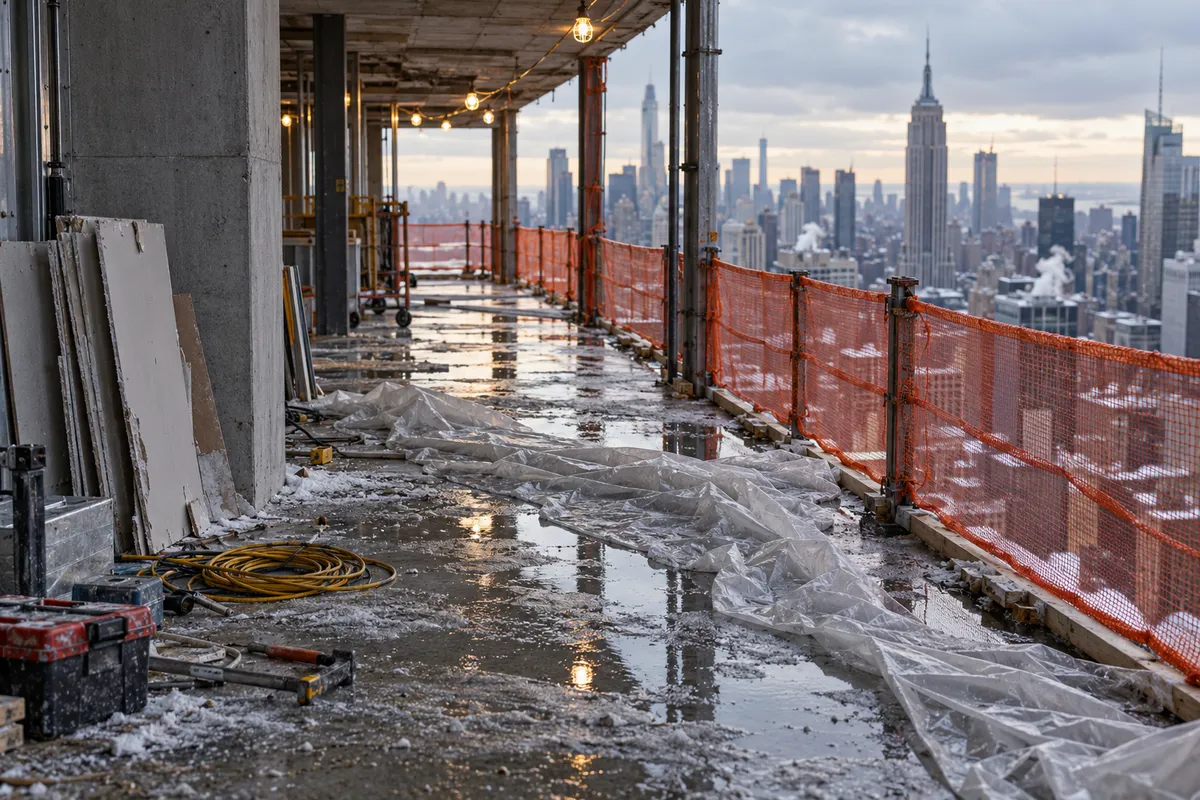
A slip and fall at work can leave you hurt, out of a paycheck, and unsure who to hold responsible. Workers' compensation covers part of your medical bills and lost wages, but it never pays for pain and suffering.
If someone other than your employer owned or controlled the place where you fell, you can sue that party for your full losses. That includes a property owner, a general contractor, another subcontractor, or the building where you were sent to work. Construction workers who slip on ice, water, or debris often have a claim under New York Labor Law § 241(6).
Michael Gunzburg has tried injury cases in New York City courts for more than 39 years. He is also a Certified Public Accountant, which helps when lost wages and future earnings must be proven. His firm recovered $2.5 million for an ironworker hurt at 5 Times Square when the developer and general contractor failed to provide proper safety equipment. Call (212) 725-8500 for a free consultation.
Last Updated: October 2026
Who Needs a Slip and Fall at Work Lawyer in Manhattan?
You need a slip and fall at work lawyer if you were hurt on the job at a property your employer doesn't own or control. That covers construction workers on Manhattan job sites, where the owner and general contractor carry safety duties under New York's Labor Law. It also covers delivery workers, movers, and couriers who fall in someone else's building.
Contracted cleaners, security guards, and building service workers hurt at a client's office or residential tower may have a claim too. If your only option is workers' compensation, a lawyer can tell you that quickly. If another party caused your fall, you may have both a comp claim and a lawsuit.
Workers' Compensation vs. a Third-Party Lawsuit
Workers' compensation pays some benefits no matter who caused your fall. A third-party lawsuit pays your full damages, but only when someone other than your employer is at fault. You can pursue both at the same time.
| Workers' compensation | Third-party lawsuit | |
|---|---|---|
| Who you claim against | Your employer's comp insurance carrier | A property owner, general contractor, subcontractor, or other party who isn't your employer |
| Do you have to prove fault? | No. Comp is a no-fault system. | Yes. You must show negligence or a Labor Law violation. |
| Lost wages | Partial: about two-thirds of your average weekly wage, up to a state maximum | Full lost wages, past and future |
| Medical bills | Covered for authorized treatment | Recoverable, including future care |
| Pain and suffering | Not available | Available |
| Key deadlines | Notify your employer within 30 days; file with the Board within 2 years | Generally 3 years to sue; 90 days for a Notice of Claim against City, MTA, or NYCHA property |
Michael Gunzburg, P.C. focuses on the third-party lawsuit. Your workers' compensation claim is filed separately with the New York State Workers' Compensation Board.
Common Situations Handled
Michael Gunzburg, P.C. handles slip and fall claims for workers hurt on construction sites, in commercial buildings, and at client workplaces across Manhattan. Each situation below can support a claim against someone other than your employer.
Slipping on Ice or Water at a Construction Site
Winter turns open floor decks, ramps, and outdoor walkways on Manhattan high-rise projects into skating rinks. New York's Industrial Code requires that ice and snow on construction walking surfaces be removed, sanded, or covered. When the owner or general contractor lets it build up, a worker who slips may have a construction accident claim under the Labor Law.
Tripping Over Debris in a Passageway
Gut renovations in Midtown office towers and residential conversions leave hallways full of drywall scraps, cable, and loose materials. Passageways on construction sites must be kept clear of debris that can cause tripping. A fall over material another trade left behind can point to the general contractor or that subcontractor.
Delivery Workers Hurt in a Lobby or on a Loading Dock
Couriers and delivery workers fall on wet marble lobbies, freight elevator landings, and greasy loading docks behind restaurants. Your employer doesn't control those spaces. The building owner or manager does, and they can be held responsible under New York premises liability law.
Contracted Cleaners and Security Guards at a Client's Building
You may work for a cleaning or security company, but the building's owner or management company controls the space. A slip on a leaking pipe, a torn mat, or a broken step the building never fixed can support a claim against them.
Slipping From a Ladder, Scaffold, or Platform
A slip on a scaffold plank, ladder rung, or raised platform often turns into a fall from height. New York's Scaffold Law, Labor Law § 240(1), holds owners and contractors responsible when they fail to provide proper fall protection. Learn more about scaffolding accidents in NYC.
Common Causes of Workplace Slip and Fall Accidents in Manhattan
Most workplace slip and falls in Manhattan come from hazards someone was required to fix and didn't. On construction sites, many of those duties are written into the New York State Industrial Code (12 NYCRR Part 23). A violation of a specific code section can support a claim under Labor Law § 241(6).
Ice, Snow, Water, and Grease on Work Surfaces
A slipping hazard is any substance on a walking or working surface that makes footing unsafe. Industrial Code § 23-1.7(d) bars employers from letting workers use a floor, walkway, scaffold, or platform in a slippery condition. Ice, snow, water, and grease must be removed, sanded, or covered. This is one of the code sections cited most often in construction slip and fall cases.
Debris, Tools, and Materials in Walkways
A tripping hazard is debris, tools, or materials left where workers have to walk. Industrial Code § 23-1.7(e) requires passageways to be kept free of dirt, debris, and obstructions. Working areas must also be kept clear of scattered tools and materials, as far as the work allows. Courts treat slipping and tripping as separate hazards, so how you describe your fall matters.
Plastic Sheeting and Floor Coverings
Plastic sheeting and tarps laid over floors to protect them from paint and dust become slick underfoot. In 2024, New York's highest court held that a plastic floor covering on a Manhattan job site was a slipping hazard under the Industrial Code. That ruling made the defendants liable under Labor Law § 241(6).
Unprotected Floor Openings and Edges
An unguarded opening is a hole, shaft, or floor edge with no cover or railing. A worker who slips near one can fall a full story or more. Falls like these are usually Labor Law § 240(1) claims, and the owner and contractor must provide covers, guardrails, or harnesses.
Poor Lighting in Stairwells and Unfinished Floors
Poor lighting hides spills, debris, and uneven surfaces in stairwells, basements, and unfinished floors. The Industrial Code sets minimum lighting levels for areas where people work or pass through on construction sites. Dim temporary lighting is a common factor in falls during early morning and evening shifts.
Building Defects in Finished Workplaces
Leaks, worn stair treads, loose handrails, and torn mats cause falls in finished buildings too. Under Labor Law § 200 and common-law negligence, the party that controls the property must keep it reasonably safe and fix hazards it created or knew about. Read more about Labor Law § 200.
Why Hiring a Workplace Slip and Fall Lawyer Matters
Without a lawyer, most injured workers collect workers' compensation and never learn they had a lawsuit worth far more. Comp adjusters have no reason to tell you that a building owner or general contractor may owe you full damages.
Workplace slip and fall cases are harder than most injury claims. A single Manhattan job site can have an owner, a developer, a general contractor, a construction manager, and a dozen subcontractors, each with its own insurer. Each one will point at someone else.
Finding out who controlled the spot where you fell takes contracts, site logs, safety meeting records, and permits. Those records rarely surface without a lawsuit.
Your comp carrier also has a lien on any third-party recovery for the benefits it paid. New York law requires the carrier's consent, or a court's approval, before you settle. How that lien is handled affects how much of the settlement you actually keep.
What the Right Lawyer Changes
You recover full damages, not partial wages. A third-party claim pays the losses comp leaves out, including pain and suffering and the full value of your lost income.
Evidence gets locked down early. Michael Gunzburg or an investigator visits the scene in person, before the site changes and before temporary conditions are cleaned up.
The lien gets negotiated, not just paid. Coordinating the comp lien with the third-party settlement can put more money in your pocket at the end of the case.
Michael Gunzburg, P.C. recovered $4.5 million in a settlement reached during trial for a construction worker who fell 20 feet from a cross beam with no safety devices. Learn more about the firm's work as a Manhattan slip and fall lawyer.
New York's Comparative Negligence Law: What If You Were Partly at Fault?
You can still recover if you were partly at fault for a workplace slip and fall in New York. The state follows pure comparative negligence, so your award is reduced by your share of the blame. If a jury finds you 30 percent at fault, you still receive 70 percent of your damages.
Under Labor Law § 240(1), your own carelessness is not a defense at all. Owners and contractors are fully responsible when they fail to provide proper fall protection, unless your conduct was the only cause of the fall. That makes Scaffold Law claims some of the strongest in New York.
Claims under Labor Law § 241(6) and Labor Law § 200 do allow a reduction for your share of fault.
Defense lawyers in workplace cases tend to make the same arguments. You were rushing. You wore the wrong boots. You walked through an area you weren't supposed to. None of these end your case, and many fall apart once the site records show what the owner and contractor allowed.
If you're worried that you share some of the blame, call (212) 725-8500. A free consultation can tell you how New York's fault rules apply to your fall.
Who Is Liable for a Slip and Fall at Work?
The parties most often liable for a slip and fall at work are the property owner, the general contractor, other subcontractors, and the company that manages the building. Your employer is usually not one of them. More than one party is often responsible for the same fall, and each carries its own insurance.
The Property Owner
Under Labor Law §§ 240(1) and 241(6), the owner of a construction site is responsible for worker safety even if it never set foot on the site. That duty is nondelegable, so the owner can't shift it to a contractor by contract. A Manhattan building owner who hires a contractor to renovate a floor still answers for a slippery deck or a debris-covered walkway.
The General Contractor or Construction Manager
The general contractor runs the job site and coordinates the trades. It carries the same Labor Law duties as the owner and usually controls site cleanup, snow removal, and safety programs. A construction manager can share that liability when it acts as the owner's agent with authority over safety.
Other Subcontractors
Electricians, plumbers, drywall crews, and other trades that aren't your employer can be liable when their work created the hazard. A trade that left debris in a passageway or spilled fluid on a floor can be sued directly under negligence and Labor Law § 200.
Building Management Companies and Commercial Tenants
In finished office and residential buildings, the management company or a commercial tenant may control the area where you fell. Liability follows control. The party responsible for maintaining the lobby, loading dock, or stairwell is responsible for fixing its hazards.
The City and Public Agencies
Public projects carry extra rules. When the City of New York, NYCHA, or the MTA owns the property, you must file a Notice of Claim within 90 days of the fall before you can sue. Missing that deadline can end the claim.
Equipment Manufacturers
A ladder, scaffold component, or safety harness that failed because of a design or manufacturing defect can support a product liability claim against the manufacturer or seller.
Why Your Employer Is Usually Protected
Workers' compensation is the exclusive remedy against your own employer in most cases. That means you generally can't sue your employer for a slip and fall, even if the employer was careless. The main exception is an employer that failed to carry workers' compensation insurance. In that case, you may be able to sue the employer directly.
Compensation Available After a Slip and Fall at Work
A third-party claim can pay every loss workers' compensation leaves out, including full lost wages and pain and suffering. Comp pays a share of your wages and your authorized medical care. A lawsuit against the owner, contractor, or building can cover the rest.
Economic Damages
Economic damages are the losses you can put a number on.
- Lost wages: your full pay for the time you missed, not the partial rate comp pays.
- Lost earning capacity: the income you won't earn if your injury keeps you from returning to the trades or forces you into lower-paying work.
- Lost benefits: for union workers, the pension, annuity, and health fund contributions that stop when you stop working.
- Medical expenses: past and future treatment, surgery, physical therapy, and medication.
- Out-of-pocket costs: travel to appointments, home care, and changes to your home.
Michael Gunzburg's background as a Certified Public Accountant matters most here. Projecting decades of lost wages, raises, overtime, and union benefits takes the same skills an accountant uses every day. Insurers often lowball the economic side of a construction worker's claim because the math is complex.
Non-Economic Damages
Non-economic damages pay for how the injury changed your life. That includes physical pain, emotional distress, and the loss of activities you enjoyed before the fall.
These damages are not available in a workers' compensation claim at all. For a worker with a back or knee injury that ends a career, they are often the largest part of the recovery. See how slip and fall cases are valued on the Manhattan slip and fall compensation page.
Critical Deadlines for Workplace Slip and Fall Claims
The most urgent deadline after a slip and fall at work is the 30-day window to notify your employer in writing. Missing it can put your workers' compensation benefits at risk. Each claim you may have runs on its own clock.
30 Days: Notify Your Employer
Tell your employer in writing within 30 days of the fall, describing when, where, and how you were hurt. A text message isn't enough. Send an email or letter you can save.
2 Years: File Your Workers' Compensation Claim
File a claim (Form C-3) with the New York State Workers' Compensation Board within two years of the accident. Filing early speeds up your benefits.
3 Years: Sue a Third Party
You generally have three years from the date of the fall to sue the property owner, general contractor, or other responsible party. That clock runs separately from your comp claim. Read more about the slip and fall statute of limitations in New York.
90 Days: Notice of Claim for Public Property
If the City, NYCHA, or the MTA owns the property, you must file a Notice of Claim within 90 days. The lawsuit itself must then be filed within one year and 90 days of the fall.
What to Do Immediately After a Slip and Fall at Work in Manhattan
Report the fall, get medical care, and preserve evidence of who controlled the site before the scene changes.
- Report the fall to your supervisor in writing. Keep a copy, and ask that the accident be logged.
- Get medical care the same day and tell the provider it happened at work. Name every body part that hurts.
- Photograph the hazard and the area around it. Capture the ice, debris, sheeting, or missing guardrail before anyone cleans it up.
- Write down who runs the site. Note the general contractor's name, the other trades working nearby, and the names on the Department of Buildings permit posted at the site.
- Get the names and phone numbers of coworkers and witnesses. People move between job sites quickly, so ask before they leave.
- Don't give a recorded statement to the owner's or contractor's insurance company, and don't sign anything. Talk to a lawyer first.
What Happens After You Call Michael Gunzburg, P.C.
After you call, the firm reviews your fall, investigates the site, and identifies every party that may owe you compensation.
A Free Consultation, on Your Schedule
The first consultation is free, and there are no upfront costs. A receptionist answers on weekdays during business hours, and the firm's AI assistant takes calls after hours and on weekends. If you're in the hospital or can't travel, the firm offers home and hospital visits.
A Site Investigation That Names Every Responsible Party
Michael Gunzburg or an investigator goes to the site in person to document the hazard. The firm then gathers the records that show who controlled the area, including permits, contracts, and site safety logs.
Your Comp Claim and Lawsuit, Kept in Step
Your workers' compensation claim continues on its own track while the lawsuit moves forward. The firm accounts for the comp lien from the start so it doesn't take you by surprise at settlement.
Key Takeaways
- Under Labor Law § 240(1), a worker's own carelessness doesn't reduce the recovery unless it was the only cause of the fall.
- Industrial Code § 23-1.7(d) requires ice, snow, water, and grease on construction walking surfaces to be removed, sanded, or covered, and a violation can support a Labor Law § 241(6) claim.
- Notice to your employer must be in writing within 30 days, and a text message doesn't count.
- Lost union pension, annuity, and health fund contributions are recoverable in a third-party claim, and Michael Gunzburg's CPA background helps project them accurately.
Proven Results and Client Experience
Michael Gunzburg, P.C. has recovered millions of dollars for construction workers hurt on Manhattan job sites.
$2.5 Million During Trial: Ironworker Injured at 5 Times Square
A 31-year-old ironworker fell 6 to 8 feet from the 7th floor at 5 Times Square. His safety harness stopped a longer fall, but the developer and general contractor had failed to provide proper safety equipment. He suffered a brain injury, herniated discs, inner ear damage in both ears, and a chronic pain condition, and he could not return to work. The case settled for $2.5 million during trial.
Construction workers have trusted the firm with other serious injuries, too. Noel, a construction taper, was struck by falling ice on a Manhattan sidewalk. In his own words, his legal team uncovered proof that the building owners had known about the ice for years.
See more verdicts and settlements.
Prior results do not guarantee a similar outcome.
Common Questions About Slip and Fall at Work Claims in Manhattan
Can I sue my employer for a slip and fall at work?
No, in most cases you can't sue your employer for a slip and fall at work. New York's workers' compensation law makes comp the exclusive remedy against your own employer, even if the employer was careless. The main exception is an employer that didn't carry workers' compensation insurance. You can still sue other parties who caused your fall, such as the property owner, the general contractor, or another subcontractor. Those claims can pay full lost wages and pain and suffering, which comp never covers.
Can I collect workers' comp and sue a third party at the same time?
Yes. You can receive workers' compensation benefits and file a lawsuit against a third party for the same fall. The two claims run on separate tracks with separate deadlines. Comp pays partial wages and medical care right away, regardless of fault. The third-party lawsuit takes longer but can pay your full damages. Many seriously injured construction workers in Manhattan pursue both. Filing for comp first doesn't waive your right to sue a third party, and suing doesn't stop your comp checks.
Will a third-party lawsuit reduce my workers' comp benefits?
Your comp benefits continue while the lawsuit is pending. When the lawsuit resolves, the comp carrier is repaid from your recovery for the benefits it already paid. That is called the comp lien. The carrier may also take a credit against future benefits, depending on the size of your recovery. A lawyer can often negotiate the lien and plan for the credit so more of the settlement stays with you. Your comp carrier must also consent to any settlement, or a court must approve it.
Can I sue my employer for pain and suffering?
No, not from your employer. Pain and suffering is not available through workers' compensation, and comp is the only remedy against your employer in most cases. You can recover pain and suffering from a third party, such as the building owner or general contractor, if their negligence or a Labor Law violation caused your fall. That's one of the main reasons a third-party claim matters. New York juries can award pain and suffering for both past and future pain, so a career-ending injury can carry real value.
Can I get fired for reporting a fall at work?
No. New York law makes it illegal for an employer to fire, threaten, or discriminate against you for reporting a work injury or filing a workers' compensation claim. If that happens, you can file a discrimination complaint with the Workers' Compensation Board. Report your fall in writing and keep a copy. That written record protects both your benefits and your rights if your employer retaliates. Retaliation complaints have their own filing deadline, so act quickly if you're punished for reporting.
What if I slipped on ice at a construction site?
You may have a strong claim against the owner and general contractor. New York's Industrial Code requires ice and snow on construction walking surfaces to be removed, sanded, or covered. A slip on ice that wasn't cleared can support a claim under Labor Law § 241(6). Photograph the ice and the area right away, and note the weather. Ice on a job site often melts or gets cleared within hours. Also tell your supervisor in writing that the surface was icy, so the hazard is on record.
I'm a delivery worker who fell in a building. Who do I sue?
You can usually bring a claim against the building's owner or management company if a hazard they controlled caused your fall. That includes wet lobby floors, broken stairs, and greasy loading docks. Your delivery company doesn't control those spaces, so the building is responsible for keeping them safe. If you work through an app as an independent contractor, workers' comp may not cover you at all. That makes a claim against the building even more important. Take photos of the hazard and write down the building address before you leave.
How much does a workplace slip and fall lawyer cost?
A workplace slip and fall lawyer at Michael Gunzburg, P.C. costs nothing upfront. The firm works on a contingency fee basis, so the fee comes out of your recovery. The first consultation is free, and there's no obligation to hire the firm after it. You can find out whether you have a third-party claim without paying anything. The fee percentage is set out in a written agreement you sign before any work begins, so there are no surprises later.
Do I need a separate lawyer for my workers' comp claim?
Many injured workers have a separate representative for their workers' compensation claim, and the Workers' Compensation Board sets those fees. Michael Gunzburg, P.C. focuses on the third-party lawsuit against the owner, contractor, or building. The two claims affect each other through the comp lien, so it helps when both sides stay in contact. Ask about it during your free consultation. Bring any comp paperwork you have, such as your C-3 form or Board decisions, so the firm can see where that claim stands.
Areas We Serve
Michael Gunzburg, P.C. represents workers hurt on job sites and in buildings across Manhattan, from Hudson Yards and the high-rise projects of Midtown to the Financial District and Times Square. The firm also handles falls in residential conversions on the Upper West Side and Upper East Side and in buildings throughout Harlem. Its office at 950 Third Avenue in Midtown East is close to many of the city's busiest construction corridors. The firm serves all five boroughs.
Get Started With a Workplace Slip and Fall Lawyer in Manhattan
A slip and fall at work doesn't have to end with partial comp benefits. If someone other than your employer controlled the site where you fell, you may be owed far more, and the evidence won't wait. Call (212) 725-8500 for a free consultation. A receptionist answers on weekdays, and the firm's AI assistant takes calls after hours and on weekends. There are no upfront costs, and you'll learn where your claim stands in a single conversation.