Pedestrian accident risk in Manhattan varies sharply by neighborhood. Midtown sees the highest concentration of pedestrian crashes in the borough, driven by dense foot traffic, heavy turning conflicts, and tourist volume, while quieter residential pockets see far fewer incidents. Knowing which areas carry higher risk, and why, helps pedestrians walk more defensively and understand their legal options if a driver hits them.
"Dangerous" Means Traffic Risk, Not Crime
When people search for dangerous Manhattan neighborhoods, most results talk about crime. That is a different question entirely. This guide is about something else: the risk of being struck by a vehicle while walking.
A neighborhood can be very safe from crime and still carry serious pedestrian crash risk. Midtown is the clearest example. Crime rates there are relatively low. But heavy foot traffic, dense turning traffic, and constant conflict points between cars and walkers make it one of the most crash-prone areas in the city. The New York City Department of Transportation tracks these crashes separately from crime through its Vision Zero program. That traffic-safety data, not crime statistics, predicts where a pedestrian is more likely to get hit.
Why Pedestrian Risk Varies So Much Across Manhattan
A few factors drive the difference between a high-risk block and a quiet one.
Foot traffic matters, but so does the ratio of pedestrians to turning vehicles. A crowded sidewalk on a street with few turns is often safer than a busy corner where trucks, taxis, and buses all compete for the same turn lane. Wide, fast avenues, like sections of 3rd Avenue and the FDR Drive access points, tend to produce more severe injuries when a crash happens, even if the total number of crashes is not the highest in the city.
Commercial vehicle volume plays a role too. Neighborhoods with heavy delivery, tour bus, or rideshare activity see more low-speed but frequent incidents. Many happen mid-block, when a pedestrian steps around a double-parked vehicle. Tourist corridors like Times Square and Herald Square add another layer. Visitors unfamiliar with New York traffic are more likely to cross against the signal or step into a bike lane without checking.
Manhattan Neighborhoods With Elevated Pedestrian Accident Risk
Midtown. The 42nd to 59th Street corridor, particularly around Times Square, Herald Square, and Columbus Circle, sees the highest density of pedestrian crashes in Manhattan. Wide intersections, constant turning traffic, and tourist volume combine to create a crash pattern that is well documented across multiple years of city crash data. Broadway's diagonal path through this stretch adds extra intersection points where drivers and pedestrians cross paths unexpectedly. [Review for accuracy — time-sensitive claim] The firm has covered this area in detail, including specific high-risk intersections, in Most Dangerous Intersections in Manhattan for Pedestrians and the Midtown East pedestrian accident guide.
Lower Manhattan and the Financial District. Narrow, historic street grids in the Financial District were never designed for current pedestrian and vehicle volume. Fulton Street, the Canal Street corridor near the Holland Tunnel approaches, and West Street along the Hudson River Greenway see frequent conflicts between rushed commuters, delivery vehicles, and rideshare pickups. See Most Dangerous Intersections in Lower Manhattan for Pedestrians for a closer look at specific locations.
Harlem and East Harlem. High-traffic corridors like 125th Street and Adam Clayton Powell Boulevard see a mix of heavy bus routes, commercial foot traffic, and turning vehicles. [Review for accuracy — time-sensitive claim] The Harlem and East Harlem pedestrian accident guide covers MTA bus liability and construction-area risks specific to this part of Manhattan.
Washington Heights. Similar to Harlem, this neighborhood combines heavy bus and transit activity with commercial corridors that see steady foot traffic throughout the day.
Manhattan Neighborhoods With Lower Pedestrian Risk
Not every part of Manhattan carries the same level of risk. Quieter residential stretches, and neighborhoods with less through-traffic, tend to see fewer pedestrian crashes.
Downtown Manhattan (Tribeca, SoHo, West Village). These neighborhoods combine lower-speed local traffic with a street grid that limits high-speed turning conflicts, though active construction in Tribeca creates its own set of hazards worth knowing about. Learn more on the Downtown Manhattan pedestrian accident page.
Chelsea and Hell's Kitchen. Despite sitting adjacent to Midtown's heavier traffic, these neighborhoods see comparatively lower pedestrian crash rates, in part because of a mix of residential blocks and slower local commercial traffic. Details are available on the Chelsea and Hell's Kitchen pedestrian accident page.
Financial District residential pockets. While Fulton Street and the tunnel approaches carry real risk, the quieter residential blocks of Battery Park City and the eastern Financial District see less pedestrian-vehicle conflict. More detail is available on the Financial District pedestrian accident page.
Lower risk does not mean no risk. A pedestrian can still be struck by a distracted or speeding driver on a quiet residential block, and the same legal protections apply no matter where the accident happens.
What to Do If You're Hit, No Matter the Neighborhood
The immediate steps after a pedestrian accident are the same across Manhattan, though the evidence available can differ by location.
Call 911 and get medical attention right away, even if the injuries seem minor. Get the driver's information if possible, and photograph the scene, the vehicle, and any visible injuries. In dense commercial corridors like Midtown or the Financial District, nearby businesses often have surveillance footage that can be requested before it gets overwritten. In residential neighborhoods with less foot traffic, witness statements may carry more weight since fewer cameras are typically present.
New York's statute of limitations gives most pedestrian accident victims three years from the date of the accident to file a lawsuit against a private driver. Claims involving a city vehicle, MTA bus, or other public entity require a Notice of Claim within 90 days, a much shorter window. Learn more about the claim process and what compensation may be available on the pedestrian accident compensation page, and see crosswalk accident claims for details specific to intersection collisions.
Michael Gunzburg, P.C. represents pedestrian accident victims throughout Manhattan, from Midtown to Lower Manhattan to Upper Manhattan, on a contingency fee basis. There is no cost to find out where a case stands. Call (212) 725-8500 for a free consultation, or reach out through the pedestrian accident page to get started.
Key Takeaways
- Pedestrian crash risk and neighborhood crime rates measure different things. A low-crime area can still see high pedestrian-vehicle collision rates.
- Midtown, Lower Manhattan and the Financial District, Harlem and East Harlem, and Washington Heights see elevated pedestrian crash activity, largely tied to traffic volume, turning conflicts, and commercial vehicle density rather than crime.
- Downtown Manhattan, Chelsea, Hell's Kitchen, and quieter residential pockets of the Financial District see comparatively lower pedestrian crash rates.
- New York's three-year statute of limitations applies to pedestrian accident claims against private drivers regardless of neighborhood; claims against public entities require a 90-day Notice of Claim.
- The same legal protections apply no matter where in Manhattan the accident happens.
Frequently Asked Questions
Which Manhattan neighborhood has the most pedestrian accidents? Midtown, particularly the 42nd to 59th Street corridor around Times Square, Herald Square, and Columbus Circle, sees the highest concentration of pedestrian crashes in Manhattan. Heavy turning traffic, tourist volume, and wide intersections combine to create consistent crash activity in this area. [Review for accuracy — time-sensitive claim]
Is Midtown Manhattan actually dangerous, or is it just busy? Both. High foot traffic alone does not automatically mean higher crash risk, since more pedestrians can also mean more visibility for drivers. What makes Midtown different is the combination of high pedestrian volume with heavy turning traffic and complex intersection design, which increases the number of conflict points between vehicles and people on foot.
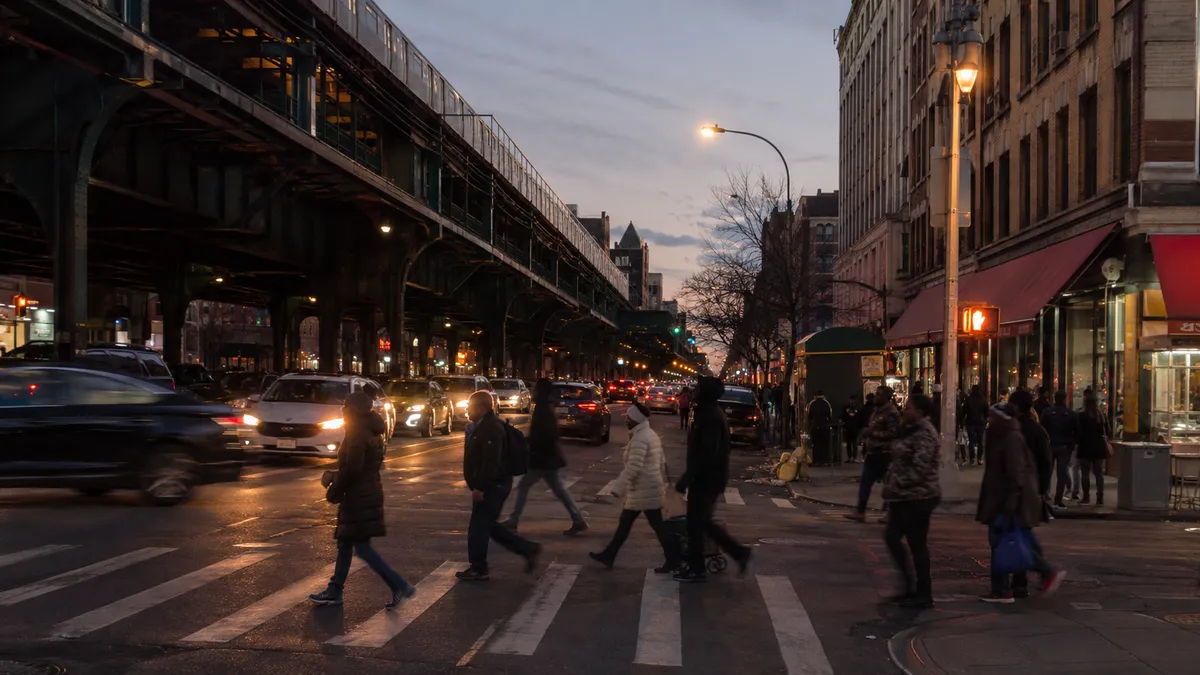
Are crosswalks in Manhattan safe? Marked crosswalks give pedestrians the right of way in most situations, but they do not eliminate risk. Many pedestrian accidents happen in crosswalks when drivers make turns without checking for pedestrians already crossing, or fail to stop at red lights and stop signs. A marked crosswalk reduces risk but does not remove it entirely, particularly at intersections with heavy turning traffic.
Which Manhattan neighborhood is safest for pedestrians? Quieter residential neighborhoods with less through-traffic and fewer turning conflicts, including parts of Downtown Manhattan, Chelsea, and the residential blocks of the Financial District, tend to see fewer pedestrian crashes than the borough's busiest commercial corridors. No neighborhood is entirely free of risk, and pedestrians should stay alert everywhere.
How can pedestrians stay safer in high-traffic Manhattan neighborhoods? Make eye contact with drivers before crossing, especially at intersections where vehicles are turning. Avoid crossing mid-block or against signals, since these situations carry higher risk even though New York law still allows for partial recovery if a driver was also at fault. Stay alert near bus stops and delivery zones, where vehicles frequently pull in and out unpredictably.
What should I do if I'm hit by a car in a Manhattan neighborhood with fewer traffic cameras? Get witness contact information immediately, since footage may not be available to corroborate what happened. Photograph the scene in as much detail as possible, including the vehicle, license plate if visible, and any skid marks or debris. Call the police to file a report even if the accident seems minor, since a documented report supports the claim regardless of camera coverage in the area.
Does the neighborhood where an accident happened affect my legal case? The core legal protections, including New York's comparative negligence rule and the statute of limitations, apply the same way regardless of neighborhood. What can differ is the type of evidence available. Commercial corridors with more surveillance cameras may make it easier to obtain footage, while residential areas may rely more heavily on witness statements and police reports.
Why do Manhattan neighborhoods have different pedestrian accident rates if the whole borough is dense? Density alone does not determine risk. Traffic patterns matter more: the number of turning conflicts, the width and speed of avenues, commercial vehicle activity, and how much through-traffic a neighborhood carries all affect how often pedestrians and vehicles come into conflict, independent of how many people are walking on the sidewalk.