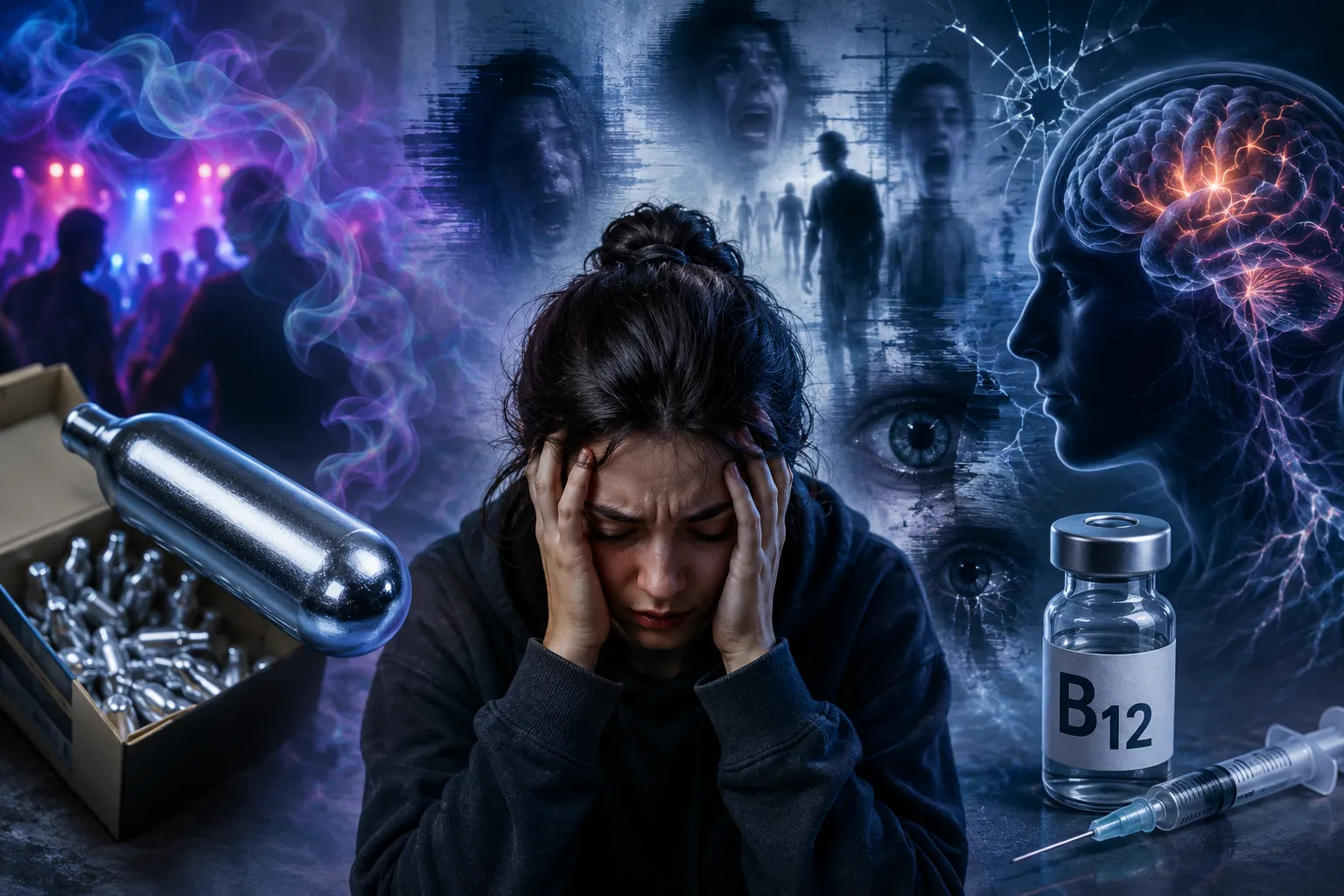
Nitrous oxide can trigger psychosis in some people who use it heavily, and case reports in medical journals document real instances of hallucinations, delusions, and confused thinking tied directly to nitrous oxide misuse. This isn't a rare or fringe reaction. It's a documented consequence of the same vitamin B12 depletion that causes nerve damage, and it can show up even in people who never had a psychiatric diagnosis before.
Last Updated: July 2026
How Does Nitrous Oxide Cause Psychosis?
Nitrous oxide oxidizes vitamin B12, the same process behind the nerve damage covered on the firm's nitrous oxide health effects page. B12 doesn't just protect nerve fibers. It also plays a role in producing key neurotransmitters that regulate mood, perception, and thought.
When B12 stops working properly, that neurotransmitter production breaks down along with it. Case reports in psychiatric literature describe patients who developed acute psychotic symptoms within days of heavy nitrous oxide use, with no prior psychiatric history. The pattern researchers keep finding is B12 depletion first, psychiatric symptoms second.
What Does Nitrous Oxide-Induced Psychosis Look Like?
Documented cases describe a fairly consistent set of symptoms. Patients report hallucinations, both visual and auditory, along with delusional thinking and disorganized speech. Some cases include paranoia. Others involve a patient becoming detached from reality in ways family members notice before the patient does.
Medical case reports published in journals like the Journal of Nervous and Mental Disease and clinical case series from psychiatric hospitals describe patients presenting with these symptoms after confirmed heavy nitrous oxide use. In several documented cases, physicians initially suspected a primary psychiatric disorder like schizophrenia, until blood work revealed severe B12 deficiency instead.
Is Nitrous Oxide Psychosis Temporary or Permanent?
Many documented cases show real improvement once B12 levels are corrected through supplementation, sometimes within weeks. That's the encouraging part of what the research shows. Recovery isn't guaranteed, though, and some case reports describe patients with lingering cognitive or psychiatric symptoms even after treatment, particularly when B12 depletion was severe or use continued over a long period.
Whether symptoms fully resolve seems to depend on how much damage occurred before treatment started and how quickly a person got help. This is one more reason early diagnosis matters, both for the person experiencing symptoms and for anyone building a record of how the injury happened.
How Is Nitrous Oxide Psychosis Diagnosed and Treated?
Diagnosis typically starts with blood testing for B12 levels, along with a psychiatric evaluation to document symptoms. Because psychosis has many possible causes, doctors sometimes rule out other conditions first, which can delay a correct diagnosis if nitrous oxide use isn't mentioned or asked about directly.
Treatment usually centers on B12 replacement therapy, often given by injection for faster absorption, alongside psychiatric care to manage symptoms while B12 levels recover. Some patients need short-term antipsychotic medication during the acute phase, even when the underlying cause is nutritional rather than a primary mental illness.
Can You Take Legal Action for Psychiatric Injury From Nitrous Oxide?
Psychiatric harm from nitrous oxide misuse is a real, documented injury, and it can be the basis for a legal claim in the same way physical nerve damage can. This isn't about placing blame on someone for using a product that was marketed and sold as a safe, flavored consumer item. It's about the companies that sold nitrous oxide canisters without adequately warning people about risks like these.
Michael Gunzburg, P.C.'s nitrous oxide lawsuit page covers eligibility for these claims in more detail, and the firm's psychiatric injury claims work centers specifically on cases involving documented mental health harm, not just physical nerve damage.
Key Takeaways
- Nitrous oxide depletes vitamin B12, which can disrupt neurotransmitter function and trigger psychotic symptoms, not just nerve damage.
- Documented cases include hallucinations, delusions, and disorganized thinking, sometimes severe enough to be mistaken for a primary psychiatric disorder like schizophrenia.
- B12 replacement therapy improves many cases, though recovery isn't guaranteed and depends on how much damage occurred before treatment began.
- Diagnosis requires blood testing for B12 alongside a psychiatric evaluation, since nitrous oxide use isn't always mentioned or asked about during an initial workup.
- Documented psychiatric harm from nitrous oxide misuse can support a legal claim separate from physical injury claims.
Frequently Asked Questions
Can nitrous oxide cause permanent psychosis?
In most documented cases, psychiatric symptoms improve significantly with B12 replacement therapy. Some case reports describe lingering cognitive or psychiatric effects, particularly after prolonged or severe use, but full recovery is common when treatment starts early.
Is nitrous oxide-induced psychosis the same as schizophrenia?
No. The symptoms can look similar, which is why some patients are initially misdiagnosed, but nitrous oxide psychosis stems from vitamin B12 depletion rather than a primary psychiatric condition. Correcting the B12 deficiency often resolves symptoms that would not respond the same way in someone with schizophrenia.
What should I do if I think Galaxy Gas or Whip-Its caused psychiatric symptoms?
Get medical evaluation first, including B12 testing, since early treatment improves the odds of recovery. Keep any medical records, product packaging, and receipts, since documentation connecting your symptoms to a specific product matters if you decide to pursue a legal claim later.
Talk to an Attorney About a Psychiatric Injury Claim
If you or someone you love experienced hallucinations, delusions, or other psychiatric symptoms after using Galaxy Gas, Whip-Its, or a similar product, you may have legal options. Michael Gunzburg, P.C. represents clients nationwide in these cases. A case review is free, and there's no cost unless a case results in compensation. Call (212) 725-8500 to speak with the firm directly.
Sources referenced: peer-reviewed case reports on nitrous oxide-induced psychosis published in psychiatric and clinical journals, including case series documenting B12 deficiency as the underlying cause of acute psychotic symptoms