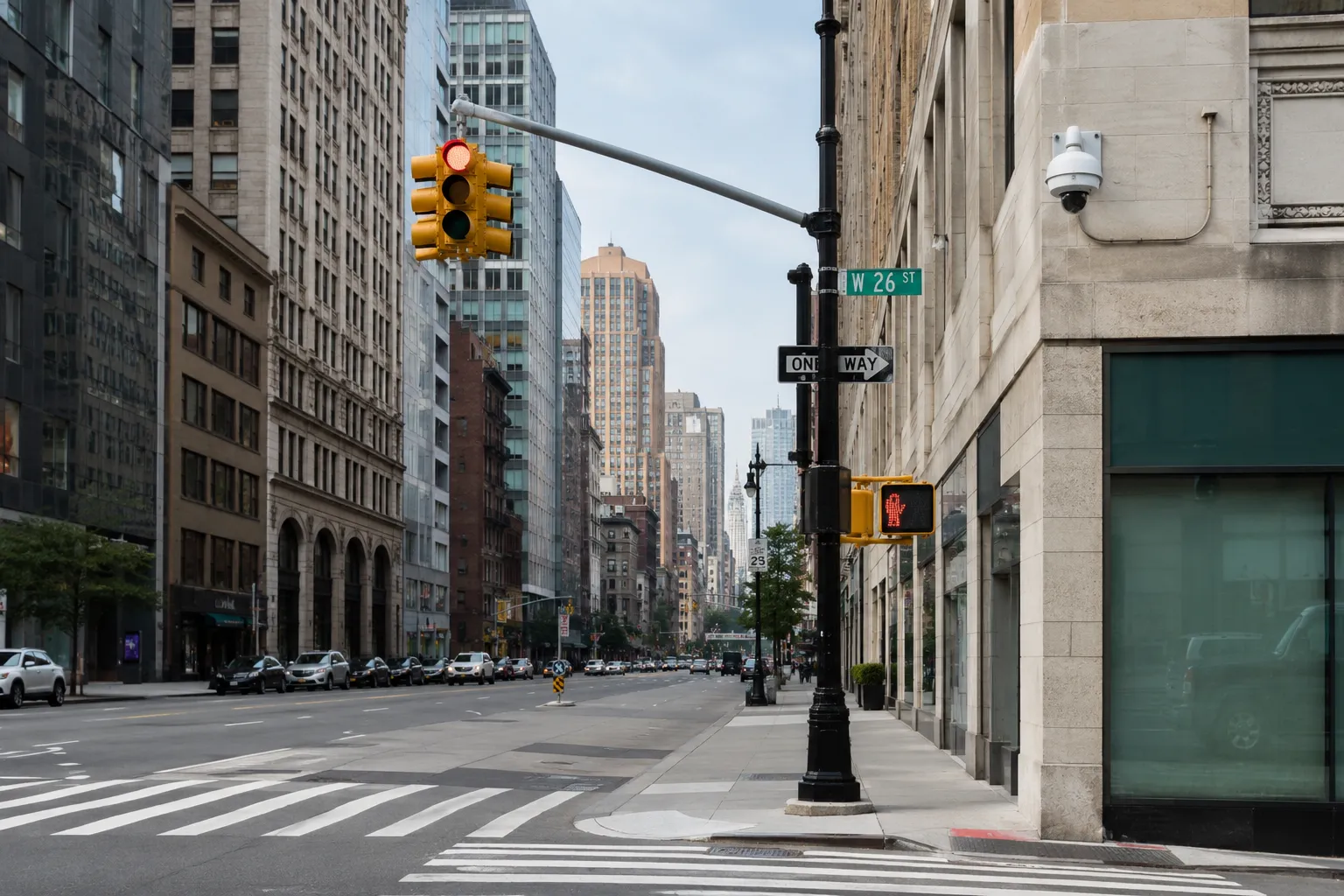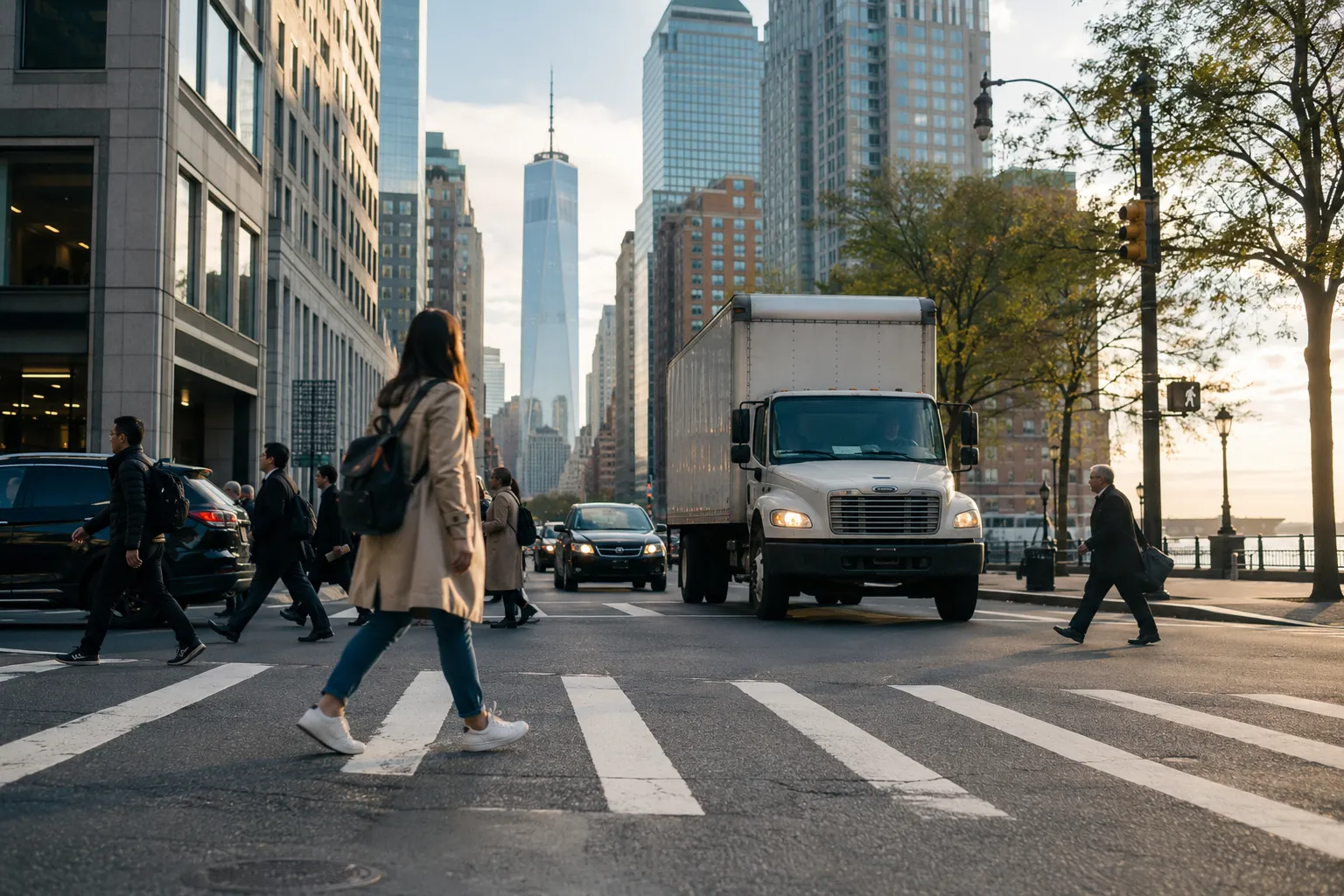
Lower Manhattan's most dangerous pedestrian intersections cluster around Canal Street and the Holland Tunnel approaches, West Street along the Hudson River Greenway, Fulton Street in the Financial District, and Chambers Street near the Civic Center. These corridors combine narrow, centuries-old streets with heavy highway and tunnel traffic, creating conditions where drivers and pedestrians regularly collide.
Key Takeaways
- Canal Street and the Holland Tunnel approaches see heavy truck and commuter traffic funneling through narrow SoHo and Tribeca crosswalks.
- West Street crossings near the Hudson River Greenway put pedestrians, cyclists, and high-speed vehicle traffic in close contact.
- Fulton Street and the surrounding Financial District streets carry one of the densest daytime foot populations in the city, with limited crosswalk capacity.
- Chambers Street draws unfamiliar pedestrians, including jurors and courthouse visitors, into a corridor with heavy municipal vehicle traffic.
- If a dangerous condition or a defective signal contributed to your accident, New York law requires a Notice of Claim against the City within a strict deadline.
- Acting quickly preserves evidence like traffic camera footage and DOT maintenance records before it disappears.
Why Lower Manhattan's Streets Are Especially Dangerous for Pedestrians
Lower Manhattan's street grid predates the rest of the borough. Streets like Pearl, Stone, and Beaver were laid out for foot and horse traffic centuries before cars existed. They run at irregular angles, narrow without warning, and offer poor sightlines at intersections. That's a sharp contrast to the predictable numbered grid found north of Houston Street.
Layer modern traffic onto that old street pattern, and the risk compounds. Tunnel and highway approach roads feed thousands of vehicles into these narrow streets every day. Drivers focused on merging toward the Holland Tunnel or West Street often aren't watching for pedestrians stepping off a curb.
Tourist foot traffic adds another layer. Visitors heading to the 9/11 Memorial, Wall Street, or the Brooklyn Bridge walkway frequently cross unfamiliar intersections while looking at phones or following directions instead of watching traffic signals. The Manhattan personal injury attorneys at Michael Gunzburg, P.C. regularly see cases where this combination of confusing street geometry and distracted walking or driving leads directly to a crash.
Canal Street and the Holland Tunnel Approaches
Canal Street ranks among the most dangerous pedestrian corridors in Lower Manhattan because it functions as the primary surface route into the Holland Tunnel. Trucks, delivery vans, and commuter traffic converge here from multiple directions at once.
The crosswalks along Canal Street are narrow compared to the volume of traffic crossing them. SoHo and Tribeca generate heavy retail and tourist foot traffic that intersects directly with vehicles merging toward the tunnel entrance. Drivers focused on lane changes near the tunnel approach often fail to notice pedestrians already in the crosswalk.
Side streets feeding into Canal, including Sixth Avenue, Varick Street, and Hudson Street, see similar patterns. Anyone struck near this corridor should reference the firm's Downtown Manhattan coverage area, which includes Tribeca and SoHo specifically.
West Street and the Hudson River Greenway Crossings
West Street carries multiple lanes of high-speed traffic running parallel to the Hudson River Greenway, one of the busiest pedestrian and cyclist paths in the city. Crossing West Street to reach the Greenway means stepping into a multi-lane roadway where vehicles are often moving faster than typical Manhattan side-street traffic.
Pedestrians crossing at marked intersections still face risk from drivers making turns onto West Street from connecting streets like Chambers, Vesey, and Liberty. The width of the roadway means pedestrians spend more time exposed to turning traffic than they would at a standard intersection.
Runners, cyclists, and pedestrians often cross here in groups during peak commuting hours, which increases the chance that a driver misjudges how many people are entering the crosswalk at once.
Fulton Street and the Financial District Corridor
Fulton Street sits at the center of one of the densest daytime pedestrian populations in Lower Manhattan. Office workers, tourists visiting the Oculus and South Street Seaport, and commuters moving between subway stations all converge on a street network that wasn't designed for this volume.
Narrow streets throughout the Financial District limit how many pedestrians can safely cross at once. Delivery vehicles and rideshare cars frequently double-park or idle in crosswalks, forcing pedestrians to step around them into active traffic lanes.
The Financial District sees a different pattern than residential neighborhoods. Most pedestrians here are commuting or working, not strolling, which means accidents often happen during rushed crossings against the signal or while drivers are searching for parking or a pickup location.
Chambers Street and the Civic Center Area
Chambers Street runs through the Civic Center, home to several courthouses and municipal office buildings. This brings a steady stream of pedestrians who are unfamiliar with the area, including jurors reporting for duty, court visitors, and government employees from outside Manhattan.
Municipal vehicles, buses, and government fleet traffic add congestion that doesn't exist in the same volume elsewhere downtown. Drivers searching for parking near courthouses sometimes make sudden stops or turns without checking for pedestrians.
People unfamiliar with the area are more likely to cross mid-block or misjudge a signal, which increases risk even at intersections with marked crosswalks and working signals.
What Should You Do After a Pedestrian Accident in Lower Manhattan?
Move out of the roadway if you're physically able to, then call 911 and request both police and EMS. Even if your injuries feel minor at the scene, adrenaline can mask serious trauma, and a recorded police report matters for any future claim.
Get the driver's name, license number, insurance information, and license plate. Photograph the vehicle, the intersection, the crosswalk markings or signal, and your visible injuries. If anyone witnessed the crash, ask for their contact information before they leave.
Avoid telling the driver or responding officers that you're "fine." Symptoms from head trauma, spinal injuries, and internal injuries often don't appear until hours or days later. For a deeper look at claim documentation and how fault is established in this kind of case, see the firm's guide on crosswalk accident claims.
Can You Sue the City of New York for a Dangerous Intersection in Lower Manhattan?
Yes, in certain circumstances. If a defective traffic signal, missing crosswalk markings, or a known dangerous street design contributed to your accident, the City of New York may share liability alongside the driver.
These cases require strict procedural compliance. New York law generally requires filing a Notice of Claim against the City within 90 days of the accident, and a lawsuit must typically follow within one year and 90 days. Missing these deadlines can permanently bar a claim against the City, even if the case against the driver remains valid.
Proving the City had prior notice of a dangerous condition, such as a documented history of crashes at the same intersection, strengthens these claims significantly. For more on how fault and right-of-way rules work in New York, review the firm's article on pedestrian right-of-way laws.
How Michael Gunzburg, P.C. Handles Lower Manhattan Pedestrian Accident Cases
Michael Gunzburg has spent 39+ years trying personal injury and medical malpractice cases throughout New York City, including pedestrian accidents across Lower Manhattan's most congested corridors. As both a licensed attorney and a Certified Public Accountant, Michael Gunzburg brings direct financial expertise to calculating the full scope of economic damages in a serious pedestrian injury case, including lost earning capacity and future medical costs that a general practice firm might miss.
The firm has secured results including a $3 million settlement for a Manhattan pedestrian struck in a crosswalk and a $2.85 million settlement for a Bronx pedestrian hit by a bus, among other verdicts and settlements throughout the five boroughs.
If you were hurt at a Canal Street, West Street, Fulton Street, or Chambers Street intersection, the firm's Downtown Manhattan team understands the specific traffic patterns and liability issues unique to this part of the city. The firm works on a contingency fee basis, so there's no upfront cost, and you pay nothing unless the case succeeds. Calls during business hours are answered by a receptionist, with a digital assistant available after hours and on weekends, and the firm commits to returning calls within 24 hours.
Frequently Asked Questions
What is the most dangerous intersection in Lower Manhattan for pedestrians?
Canal Street near the Holland Tunnel approaches is widely considered one of the most dangerous corridors for pedestrians in Lower Manhattan. Heavy truck and commuter traffic funneling toward the tunnel combines with narrow SoHo and Tribeca crosswalks, creating conditions where drivers frequently fail to notice pedestrians already crossing.
Why are pedestrian accidents common near the Holland Tunnel?
Drivers approaching the Holland Tunnel are often focused on merging into the correct lane rather than watching for pedestrians. This creates a pattern where vehicles cut across crosswalks on Canal Street and surrounding side streets without yielding properly, particularly during peak commuting hours.
Do pedestrians have the right of way in Lower Manhattan crosswalks?
Yes, drivers must yield to pedestrians crossing in marked or unmarked crosswalks under New York Vehicle and Traffic Law Section 1151. This applies even when a driver has a green light and is making a turn. Pedestrians crossing mid-block or against a signal share some responsibility under New York's comparative negligence rules but can still recover compensation.
What should I do immediately after being hit by a car in Tribeca or the Financial District?
Call 911 and request police and EMS, even if your injuries seem minor. Photograph the scene, the vehicle, and the crosswalk or signal involved. Get the driver's insurance and contact information along with any witness statements. Avoid telling anyone you're "fine" before a doctor examines you.
How long do I have to file a claim against the City of New York?
A Notice of Claim against the City of New York generally must be filed within 90 days of the accident, with a lawsuit typically required within one year and 90 days. These deadlines are strict and missing them can bar a claim against the City permanently, even if your claim against the driver remains valid.
Can I still recover compensation if I was partly at fault?
Possibly, yes. New York follows a pure comparative negligence standard, meaning you can still recover compensation even if you share some responsibility for the accident. Your total recovery is reduced by your percentage of fault, but a partial fault finding does not eliminate your claim entirely.
What if the driver who hit me fled the scene?
New York's Motor Vehicle Accident Indemnification Corporation, known as MVAIC, may cover your losses when the at-fault driver can't be identified. These claims require fast action and specific filing procedures, so contacting an attorney quickly matters for hit-and-run cases.
Does NYC's Vision Zero initiative apply to Lower Manhattan streets?
Yes. Vision Zero is a citywide initiative launched in 2014 aimed at eliminating traffic fatalities and serious injuries, and it has led to lower speed limits, expanded leading pedestrian intervals, and increased enforcement on many streets, including parts of Lower Manhattan. Coverage and enforcement intensity still varies by corridor.
How much is my Lower Manhattan pedestrian accident case worth?
Case value depends on factors including the severity of your injuries, your medical costs, lost income, and the strength of available evidence. An attorney can give a more accurate range after reviewing your medical records, the police report, and the specific facts of how the accident happened.
Do I need a lawyer if my injuries seem minor?
Symptoms from head trauma, spinal injuries, and internal injuries often don't show up until hours or days after a pedestrian accident. Speaking with an attorney early, even for what feels like a minor injury, helps protect your right to pursue compensation if your condition turns out to be more serious than it first appears.
If You Were Hurt Crossing a Lower Manhattan Street
Canal Street, West Street, Fulton Street, and Chambers Street each carry their own mix of traffic patterns and pedestrian risk, but the legal path forward after an accident follows the same basic steps: get medical care, document the scene, and act quickly on any deadlines tied to a government claim.
Michael Gunzburg, P.C. represents pedestrian accident victims throughout Manhattan, including Lower Manhattan, Tribeca, SoHo, and the Financial District. The firm works on a contingency fee basis, so there's no cost to find out where you stand. Call (212) 725-8500 for a free consultation, or reach out online to get started.