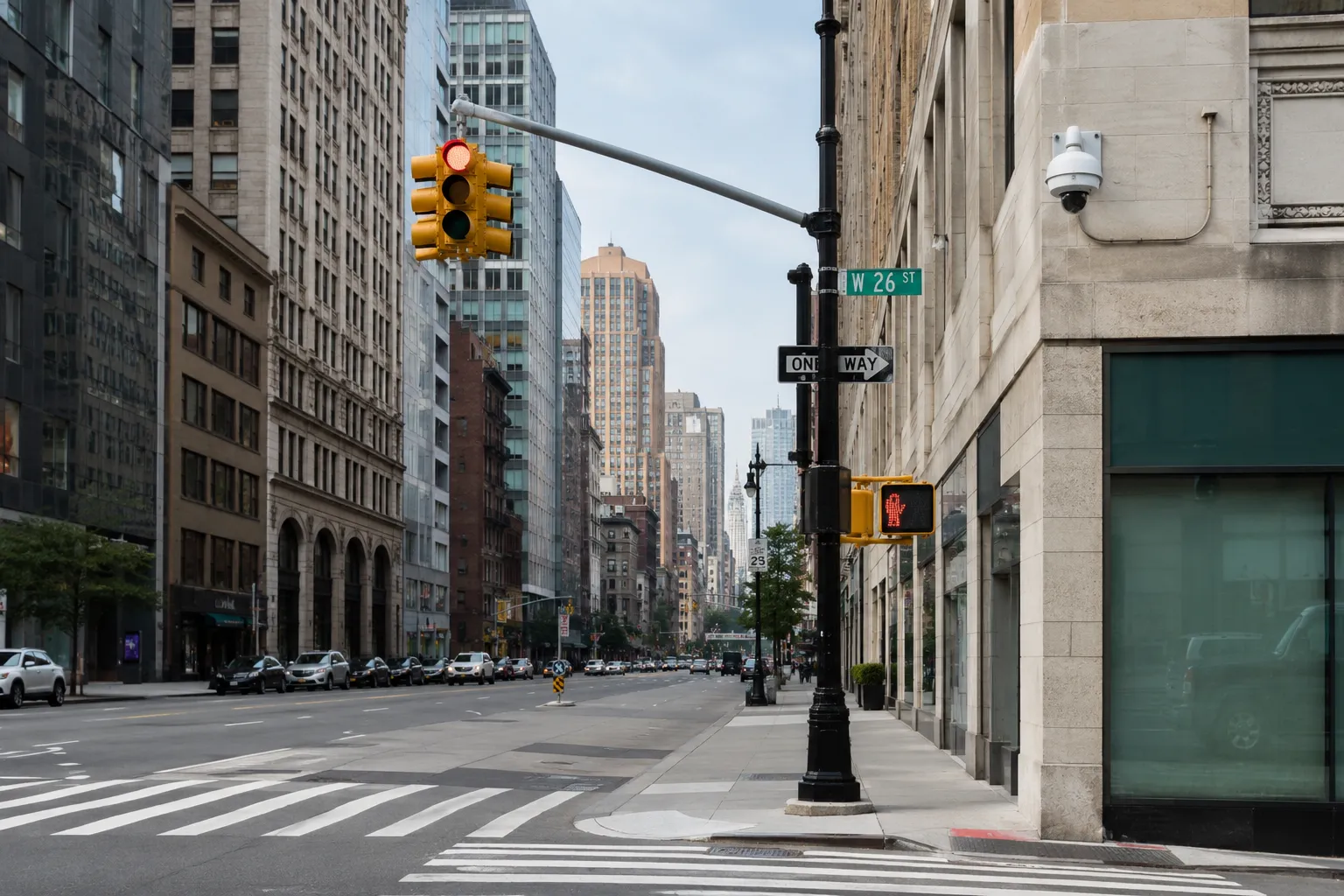
Manhattan's most dangerous intersections for pedestrians are concentrated in Midtown, particularly around Times Square, Herald Square, and the 42nd to 59th Street corridor, along with high-risk crossings in Washington Heights and East Harlem. If you were struck by a vehicle at any of these locations, New York law gives you the right to pursue compensation, and in some cases, the City of New York may share responsibility for your injuries.
Key Takeaways
- Midtown Manhattan accounts for a disproportionate share of pedestrian injuries, driven by pedestrian density, rideshare congestion, and complex signal patterns.
- Specific high-risk intersections include 5th Avenue & 42nd Street, Broadway in the Times Square area, 2nd Avenue & 59th Street, and Broadway & West 190th Street in Washington Heights.
- New York's comparative negligence law allows you to recover compensation even if you were partly at fault.
- Claims against the City of New York require a Notice of Claim filed within 90 days of the accident.
- The general statute of limitations for a pedestrian accident claim in New York is three years.
- Michael Gunzburg, P.C. has represented pedestrian accident victims across Manhattan for over 39 years.
Why Manhattan Has Some of the Most Dangerous Streets for Pedestrians in the U.S.
Manhattan consistently ranks among the most dangerous places in the country to be a pedestrian. More than 1.6 million people live on the island, and millions more commute, visit, and walk through it every day. That foot traffic, combined with a dense mix of taxis, rideshare vehicles, delivery trucks, MTA buses, and private cars, creates conditions where accidents happen with alarming regularity.
New York City launched its Vision Zero initiative in 2014 with the goal of eliminating all traffic fatalities and serious injuries. While the program has produced improvements in some corridors, pedestrian deaths in Manhattan remain a persistent problem. According to NYC Department of Transportation data, pedestrians account for roughly half of all traffic fatalities citywide each year.
Several factors make Manhattan uniquely dangerous compared to other urban areas. Signal timing often fails to give pedestrians enough time to cross wide intersections before turning vehicles cut in. Leading Pedestrian Intervals, which give walkers a head start before cars get the green, are still missing at many of the city's most dangerous crossings. Add distracted driving, speeding through yellow lights, and the sheer volume of vehicles making right and left turns across pedestrian paths, and the risk at any given corner becomes significant.
The Role of Intersection Design in Pedestrian Accidents
Not every pedestrian accident comes down to a driver running a red light. Poor intersection design plays a real role in how many people get hurt.
Slip-turn lanes, where vehicles can turn without stopping, give pedestrians almost no protection when crossing. Wide multi-lane crosswalks at major Midtown intersections force pedestrians to spend more time in the roadway, increasing exposure to turning traffic. In areas with heavy freight and delivery activity, like Canal Street and the Garment District, oversized vehicles routinely block sightlines and encroach on crosswalk space.
The NYC Department of Transportation and advocacy groups like Transportation Alternatives have documented many of these design failures and pushed for safety improvements. Progress has been uneven, and some of the city's most dangerous intersections have seen little meaningful change in years.
The Most Dangerous Intersections for Pedestrians in Manhattan
The following intersections and corridors have documented histories of pedestrian crashes, fatalities, and serious injuries. Some appear in NYC DOT safety reports. Others have been flagged by Transportation Alternatives or identified through crash data compiled by local advocacy groups and legal practitioners who handle these cases.
Midtown Manhattan: The Highest-Risk Zone for Pedestrians
5th Avenue & East 42nd Street sits at one of the busiest pedestrian crossings in the world. Constant congestion, tourist foot traffic, and aggressive lane changes from drivers trying to beat lights make this intersection consistently dangerous. The volume of people crossing at any given moment creates a false sense of safety, drivers know pedestrians will be there, but that doesn't always translate to yielding.
Broadway in the Times Square area is not a single intersection but a cluster of closely spaced crossings between roughly 42nd and 47th Streets. Distracted pedestrians, rideshare vehicles stopping mid-block, and complex signal patterns at angled Broadway crossings combine to create conditions where accidents happen regularly. The conversion of portions of Broadway to pedestrian plazas has helped, but the surrounding streets remain high-risk.
3rd Avenue at 50th and 55th Streets sees frequent left-turn crashes. The wide roadway encourages speeding, and drivers making left turns across oncoming pedestrian traffic at these intersections have been responsible for serious injuries. This stretch is a known problem corridor for the East Midtown neighborhood.
2nd Avenue & East 59th Street carries heavy pedestrian traffic feeding to and from Queensboro Bridge approaches, with frequent turning conflicts and speeding during off-peak hours when enforcement is lighter. Pedestrians crossing here often contend with vehicles accelerating to make the bridge approach.
For anyone injured at a Midtown intersection, understanding how intersection accidents are prosecuted under New York law is an important first step.
Uptown Manhattan: Underreported but High-Risk
Uptown Manhattan does not get the same media attention as Midtown, but the data tells a different story. Washington Heights and Harlem see pedestrian fatality rates that are disproportionately high relative to the coverage they receive.
Broadway & West 190th Street in Washington Heights combines high vehicle speeds with transit stops and pedestrian crossings in close proximity. Commuters exiting the A train at 190th Street cross Broadway where traffic moves fast and drivers frequently fail to yield.
Upper Broadway more broadly is a long, wide corridor where uninterrupted stretches of road encourage speeding. The combination of residential density, busy transit stops, and fast-moving traffic along the upper Broadway corridor has contributed to a steady history of pedestrian crashes.
East Fordham Road adjacent areas and the 125th Street corridor in Harlem are among the busiest pedestrian areas north of Midtown and carry elevated injury rates, particularly for older residents and children.
Canal Street and the surrounding Chinatown and Tribeca areas also deserve mention. Dense commercial traffic, delivery vehicles double-parked across crosswalks, and heavy pedestrian movement create ongoing hazards that are well-documented but difficult to enforce.
What Should You Do If You're Hit by a Car at a Manhattan Intersection?
Call 911 immediately. Even if you believe your injuries are minor, you need a police report on record and emergency medical evaluation at the scene. Symptoms from traumatic brain injuries, internal injuries, and spinal trauma can take hours or days to appear. Never tell anyone at the scene that you are fine, as explained in detail in this article on what not to say after a pedestrian accident in New York, those words can be used against you later.
While at the scene, document everything you can. Photograph the intersection, the vehicle, the driver's license plate, any visible injuries, and any traffic signals or signage in the area. Collect contact information from witnesses. Ask the responding officer for the report number.
Do not give a recorded statement to any insurance company before speaking with an attorney. Insurers move quickly after accidents, and early statements can limit your recovery significantly.
Michael Gunzburg, P.C. represents Manhattan pedestrian accident victims and can advise you on your options at no cost during an initial consultation.
Why Intersection Crashes Often Involve Multiple Liable Parties
A driver who fails to yield is the most obvious defendant, but intersection accident cases in Manhattan often involve more than one responsible party. The driver's employer may be liable if the vehicle was operated during work hours. A trucking company may bear responsibility for a delivery driver's conduct. In some cases, the City of New York carries liability for intersection design failures, broken signals, or inadequate signage that contributed to the crash.
When the accident involves a taxi, Uber, Lyft, or other for-hire vehicle, additional insurance layers come into play. Identifying all liable parties early in a case protects your right to full compensation and prevents claims from being deflected onto underinsured defendants.
The firm's NYC pedestrian accident practice handles cases across all five boroughs and has the experience to trace liability through complex fact patterns.
If you've been injured and are unsure whether you have a case, you can start with the firm's free case evaluation.
Can You Sue If You're Injured at a Dangerous Manhattan Intersection?
Yes. Under New York negligence law, a driver who fails to yield to a pedestrian, runs a red light, or makes an unsafe turn can be held liable for the injuries they cause. Being in a crosswalk with the walk signal is strong evidence in your favor, but you do not have to be in a marked crosswalk to have a valid claim. New York's pure comparative negligence standard means your recovery is reduced by your percentage of fault, not eliminated by it.
To pursue a claim for pain and suffering beyond no-fault benefits, your injuries must meet New York's "serious injury" threshold under Insurance Law Section 5102(d). This includes fractures, traumatic brain injuries, significant disfigurement, and injuries that prevent you from performing daily activities for at least 90 of the 180 days following the accident.
No-fault Personal Injury Protection coverage, available through the at-fault vehicle's insurer, covers initial medical expenses and a portion of lost wages regardless of fault, up to $50,000. You must file a no-fault application within 30 days of the accident.
If you were injured in a Manhattan crosswalk accident or a hit-and-run incident, your legal options vary depending on the circumstances. An attorney can help you identify the right path forward.
When the City of New York May Be Liable for Your Injuries
If a defective signal, inadequate crosswalk design, missing signage, or a known dangerous condition contributed to your accident, the City of New York may share liability. These cases require an understanding of municipal liability law and strict procedural compliance.
Under New York General Municipal Law Section 50-e, you must file a Notice of Claim against the City within 90 days of the accident. Missing this deadline typically bars your claim against the city permanently, even if your case against the driver remains viable. A lawsuit against the city must be filed within one year and 90 days of the accident.
Acting quickly matters. Evidence at intersections, including traffic camera footage and DOT maintenance records, can be lost or overwritten. The sooner an attorney can preserve that evidence, the stronger your case will be.
Key Takeaways
- Manhattan's most dangerous pedestrian intersections are concentrated in Midtown (42nd–59th Street corridor) and in upper Manhattan neighborhoods including Washington Heights and Harlem.
- Intersection design failures, including missing leading pedestrian intervals and slip-turn lanes, contribute to many crashes beyond individual driver negligence.
- You can still recover compensation under New York's comparative negligence law even if you were partly at fault.
- Claims against New York City require a Notice of Claim within 90 days, making prompt legal consultation important.
- No-fault PIP coverage applies to initial medical costs, but a separate liability claim is required for pain and suffering.
- Michael Gunzburg, P.C. handles Manhattan pedestrian accident cases on a contingency fee basis, no fees unless you recover.
Frequently Asked Questions
What are the most dangerous intersections for pedestrians in Manhattan?
The intersections with the highest documented risk include 5th Avenue & 42nd Street, Broadway in the Times Square area (42nd–47th Streets), 2nd Avenue & 59th Street, 3rd Avenue at 50th and 55th Streets, and Broadway & West 190th Street in Washington Heights. Canal Street and sections of upper Broadway are also high-risk corridors. These locations are flagged in NYC DOT crash data and Transportation Alternatives reports based on injury frequency and severity.
Why is Midtown Manhattan so dangerous for pedestrians?
Midtown combines the highest pedestrian foot traffic in the city with a dense mix of taxis, rideshare vehicles, delivery trucks, tour buses, and commuter traffic. Signal timing in many Midtown intersections does not give pedestrians adequate time to cross before turning vehicles get the green. Tourist congestion around Times Square and Herald Square adds distraction for both drivers and pedestrians, and enforcement is inconsistent during high-volume hours.
How many pedestrians are killed in Manhattan each year?
According to NYC Vision Zero data, pedestrians account for a significant share of the city's annual traffic fatalities, with Manhattan consistently among the highest-density areas for pedestrian deaths citywide. Specific annual totals vary, but pedestrian fatalities in Manhattan have ranged from roughly 30 to 50 or more in recent years. The Vision Zero annual report, published by the NYC DOT, tracks these figures by borough and corridor.
What should I do immediately after being hit by a car at a Manhattan intersection?
Call 911, stay at the scene, and get medical attention even if you feel fine. Photograph the intersection, the vehicle, and your injuries. Get the driver's license plate, insurance information, and the names of any witnesses. Do not admit fault and do not say you are uninjured. Request the police report number. Contact a pedestrian accident attorney before giving any statement to an insurance company.
Can I file a lawsuit if I was injured at a Manhattan intersection?
Yes, if your injuries meet New York's serious injury threshold, which includes fractures, traumatic brain injuries, significant disfigurement, or substantial limitation of a body function. New York's comparative negligence law allows you to recover compensation even if you were partly at fault, though your damages will be reduced by your percentage of fault. A pedestrian accident attorney can evaluate whether your injuries qualify and help you understand your full range of options.
How long do I have to file a pedestrian accident claim in New York?
The general statute of limitations for a personal injury claim against a private defendant is three years from the date of the accident. Claims involving wrongful death carry a two-year limit. If you are suing the City of New York for intersection design or signal failures, you must file a Notice of Claim within 90 days of the accident and bring suit within one year and 90 days. These deadlines are strict, and missing them can permanently bar your claim.
Is New York City responsible for dangerous intersection design?
It can be. The City has a duty to maintain safe road conditions, including functioning traffic signals, adequate crosswalk markings, and proper signage. If a known design defect or maintenance failure contributed to your accident, the City may share liability. These cases require proof that the City had notice of the dangerous condition and failed to address it. Pursuing a claim against the City also requires strict compliance with the Notice of Claim process.
What is Vision Zero, and has it reduced pedestrian deaths in Manhattan?
Vision Zero is a NYC initiative launched in 2014 with the goal of eliminating all traffic fatalities and serious injuries. It has led to lower speed limits on many Manhattan streets, expanded leading pedestrian intervals, and increased enforcement in some corridors. Results have been mixed. While certain areas have seen improvements, pedestrian fatalities citywide have not declined consistently, and Manhattan continues to record serious pedestrian accidents in many of the same locations year after year.
Can I get compensation if I was partly at fault for the accident?
Yes. New York follows a pure comparative negligence standard, which means you can recover compensation even if you were 50% or more at fault. Your award is reduced by your percentage of fault. For example, if you are found 20% responsible for the accident and your total damages are $100,000, you would recover $80,000. Drivers, insurers, and their attorneys often try to shift blame onto pedestrians to reduce payouts, an experienced attorney can counter those tactics.
Do I need a lawyer after a pedestrian accident at a Manhattan intersection?
For serious injuries, yes. Insurance companies handling pedestrian accident claims are experienced at minimizing payouts, and the legal process, including no-fault applications, liability claims, and potential municipal claims, involves multiple deadlines and procedural steps. Michael Gunzburg, P.C. handles Manhattan pedestrian accident cases on a contingency fee basis, meaning there is no fee unless you recover compensation. You can learn more about what to expect by visiting the firm's personal injury FAQs page.
Speak With a Manhattan Pedestrian Accident Attorney
Being struck by a vehicle at a Manhattan intersection is a serious, often life-altering event. The legal process that follows can feel overwhelming when you are focused on recovery. Michael Gunzburg, P.C. has spent over 39 years representing pedestrian accident victims across Manhattan and the five boroughs, recovering substantial results for clients facing exactly these circumstances.
Attorney Michael Gunzburg holds dual credentials as a New York personal injury lawyer and a licensed CPA, which positions the firm to build thorough, evidence-based cases that account for the full economic and personal impact of serious injuries.
If you or someone you love was injured at a Manhattan intersection, contact Michael Gunzburg, P.C. at (212) 725-8500 for a free consultation. There is no fee unless you recover. You can also start with a case evaluation online.
Related Pages:
- Manhattan Pedestrian Accident Lawyer
- Manhattan Crosswalk Accident Claims
- Manhattan Hit-and-Run Pedestrian Accidents
- NYC Intersection Accident Lawyer
- NYC Pedestrian Accident Attorney
- Traumatic Brain Injury After a Pedestrian Accident
Laws and deadlines can change. This article is for informational purposes only and does not constitute legal advice. Contact Michael Gunzburg, P.C. directly for guidance specific to your situation.