Getting hit by a car is terrifying. What comes next, dealing with insurance companies, understanding who pays for what, and figuring out how to protect your claim, can feel just as overwhelming.
New York's insurance system for pedestrian accidents is layered. Multiple policies may apply to your situation, and each has its own rules, deadlines, and limitations. Knowing which coverage applies, and in what order, can make a significant difference in what you recover.
This guide breaks down the insurance landscape for pedestrian accident victims in New York, step by step.
Which Insurance Policies Cover Pedestrian Accidents?
When a car hits a pedestrian in New York, three main sources of insurance coverage may apply:
- The driver's no-fault (PIP) insurance. Under New York's no-fault system, a pedestrian injured by a motor vehicle can file a claim under the driver's auto insurance policy, regardless of who was at fault. This coverage is called Personal Injury Protection, or PIP.
- The driver's liability insurance. If your injuries are serious enough to meet New York's threshold for pain and suffering claims, you may be able to pursue a liability claim against the at-fault driver through their policy.
- Your own auto insurance policy. If you own a car and have auto insurance in New York, your own PIP coverage may also apply to your pedestrian accident, even though you were on foot when the accident happened.
If you don't own a vehicle, you may be able to access PIP benefits through a family member's policy in certain circumstances. An attorney can help you identify all available coverage in your specific situation.
What Is No-Fault Insurance, and How Does It Help Pedestrians?
New York is a no-fault state. That means pedestrians injured by motor vehicles can receive benefits for medical expenses and lost wages through the driver's auto insurance, without having to first prove the driver was negligent.
This matters because it creates a faster path to payment for immediate medical costs. You don't have to wait for a liability investigation or a lawsuit to conclude before your bills start getting covered.
Under New York's no-fault law, PIP benefits for pedestrians can include:
- Reasonable and necessary medical expenses related to the accident
- A portion of lost earnings if you're unable to work
- Other out-of-pocket expenses directly connected to your injuries
There are limits to these benefits, and the coverage does not include pain and suffering. But for covering immediate medical treatment costs, no-fault is typically the first step.
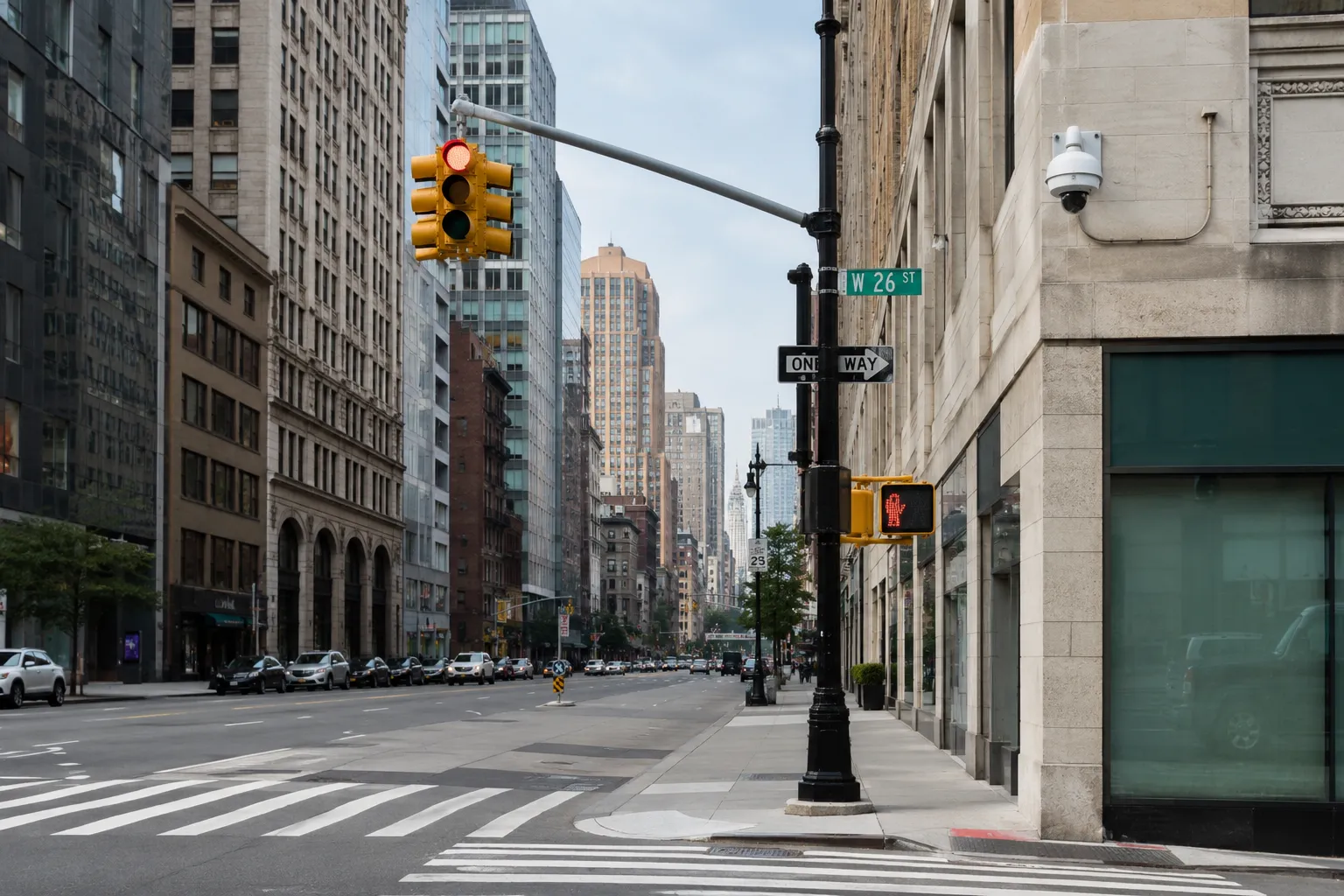
If you were struck by a vehicle in Manhattan, near a busy intersection like those around Midtown or in the Flatiron District, the driver's no-fault insurer is generally responsible for your initial medical bills, even before fault is established.
Does Car Insurance Cover Pedestrian Accidents?
Yes. In New York, the driver's auto insurance policy covers pedestrians struck by that vehicle. The no-fault portion covers your medical bills and lost wages up to policy limits. The liability portion comes into play if you suffered a serious injury and wish to file a claim for pain and suffering.
New York defines "serious injury" under Insurance Law § 5102(d). This includes fractures, significant disfigurement, permanent loss of use of a body organ or member, significant limitation of a body function, and other specified categories. If your injuries meet this threshold, you can step outside the no-fault system and pursue a full liability claim.
For a deeper look at common pedestrian injuries that meet this threshold, read Pedestrian Accident Injuries: Types, Treatment & Recovery.
How to File a Pedestrian Accident Insurance Claim in New York
Filing a no-fault claim after a pedestrian accident in New York requires moving quickly. Here is what the process looks like:
Step 1: Report the accident
Call 911 immediately. A police report creates an official record of the accident, which you'll need for your insurance claim. Make sure you get the accident report number before you leave the scene, or ask a witness to do this on your behalf if you're injured.
Step 2: Get medical attention right away
This is the single most important step for both your health and your claim. Gaps in treatment give insurance companies reasons to deny or reduce your benefits. See a doctor as soon as possible, even if you feel okay, and keep documentation of every visit, test, and prescription.
Step 3: Notify the driver's insurance company
You must submit a no-fault application to the at-fault driver's insurance company within 30 days of the accident. Missing this deadline can result in denial of your no-fault benefits.
Step 4: Submit medical bills and documentation
Medical providers typically bill the no-fault insurer directly, but you should keep copies of all bills and treatment records. If you're missing work, document your lost wages with letters from your employer and pay stubs.
Step 5: Work with an attorney before speaking with adjusters
Insurance adjusters may contact you shortly after the accident. Be careful. What you say, even something as simple as "I'm fine", can be used to reduce the value of your claim. Before giving any recorded statement, speak with a pedestrian accident attorney. Read more about why this matters in our article Why You Should Never Say You're Fine After a Pedestrian Accident.
If you've been injured in Manhattan or anywhere in the five boroughs, Michael Gunzburg, P.C. is available to review your claim and help you understand your options. There's no fee to consult, and the firm handles pedestrian accident cases on a contingency basis, you pay nothing unless there is a recovery.
What If the Driver Who Hit Me Was Uninsured?
Being struck by an uninsured driver doesn't necessarily mean you have no options. New York requires all auto insurance policies to include uninsured motorist (UM) coverage. If the driver who hit you has no insurance, your own UM coverage, if you have an auto policy, may compensate you for serious injuries and pain and suffering.
If you don't own a car, you may be able to access UM benefits through:
- A resident family member's auto insurance policy
- The New York Motor Vehicle Accident Indemnification Corporation (MVAIC), a state-created fund that provides coverage to eligible pedestrians who have no access to other insurance
MVAIC has its own application process and deadlines, so acting quickly is important. If you're uncertain whether you qualify, an attorney can help you navigate the filing requirements.
What Happens in a Hit-and-Run Pedestrian Accident?
Hit-and-run accidents present a specific insurance challenge because the driver's identity, and insurance, may be unknown.
In New York, the driver's departure doesn't necessarily leave you without recourse:
Your own UM coverage may apply if you have an auto policy. Unidentified drivers are treated like uninsured drivers under most policies.
MVAIC also covers eligible hit-and-run victims who cannot access UM benefits through any other policy. There are residency and eligibility requirements, and the accident generally must have been reported to police promptly.
For cases involving drivers who fled the scene, preserving evidence immediately is critical. Surveillance footage from businesses and traffic cameras often captures vehicle descriptions and partial plate numbers. See How to Prove Fault in a Manhattan Crosswalk Accident for guidance on gathering this type of evidence.
The Manhattan hit-and-run pedestrian accident page covers the legal process for these cases in more detail.
What If the Driver Was Underinsured?
Even when the driver has insurance, their policy limits may not cover the full value of your injuries. This is where underinsured motorist (UIM) coverage matters.
If you own a car with UIM coverage and the at-fault driver's liability limits are lower than the value of your damages, your UIM policy can step in to cover the difference, up to your UIM policy limits.
New York law requires insurers to offer UM coverage in amounts equal to the state's minimum liability limits, but many policies carry higher limits. Reviewing your own policy is worthwhile, particularly if your injuries are severe.
Common Insurance Company Tactics That Hurt Pedestrian Claims
Insurance companies are not on your side. Their goal is to limit what they pay out, and they use several tactics to do this with pedestrian accident victims:
Lowball settlement offers. An early offer may seem helpful when you're dealing with medical bills, but it's often far below the actual value of your claim. Once you accept a settlement, you typically cannot seek additional compensation, even if your injuries turn out to be more serious than initially thought.
Comparative fault arguments. New York follows a pure comparative negligence rule. Insurance companies may argue that you were partly at fault, for jaywalking, being distracted, or stepping off the curb unexpectedly, to reduce their payout. Under New York law, your recovery is reduced by your percentage of fault, but you can still recover even if you were partially at fault.
Challenging injury severity. Insurers may request independent medical examinations (IMEs) and use their own doctors to dispute the severity or cause of your injuries. Having consistent, thorough medical documentation from your own treatment providers is the best defense against this tactic.
Delayed claim processing. Delays are a pressure tactic. The longer your bills pile up without payment, the more tempted you may be to accept a low settlement. Knowing your rights, and having an attorney asserting them, changes this dynamic.
How to Protect and Maximize Your Pedestrian Accident Insurance Recovery
Getting the most out of your insurance claim doesn't happen by accident. These steps make a real difference:
Seek medical treatment immediately and consistently. Insurance companies look for gaps in treatment. Stay consistent with your care plan and follow through on all referrals and specialist visits.
Document everything. Keep every medical bill, prescription receipt, letter from your employer about lost work, and any out-of-pocket expense related to the accident. Photographs of your injuries over time can also be important.
Understand your policy limits. Know the limits on all policies that may apply to your situation, both the driver's policy and your own. Your attorney can help you identify all available coverage.
Don't give recorded statements without counsel. Insurance adjusters are trained to ask questions that can minimize your claim. You have the right to speak with an attorney first.
Coordinate multiple insurance sources carefully. When multiple policies are involved, no-fault, liability, UM/UIM, the order in which claims are filed and the way benefits are coordinated affects your total recovery. This is an area where attorney guidance is especially valuable.
The firm's Manhattan pedestrian accident page provides additional context on how claims are handled for victims throughout the borough.
How Long Do I Have to File a Pedestrian Accident Insurance Claim in New York?
New York law sets different deadlines depending on the type of claim:
- No-fault benefits: The application must be submitted within 30 days of the accident.
- Personal injury lawsuit against the at-fault driver: Generally three years from the date of the accident under New York's statute of limitations for personal injury claims.
- Claims involving a government vehicle (city bus, sanitation truck, etc.): A Notice of Claim must typically be filed within 90 days of the accident, with the lawsuit filed within one year and 90 days.
- MVAIC claims: Have their own filing deadlines that differ from standard claims.
Missing any of these deadlines can permanently bar your ability to recover. If you're uncertain whether a deadline applies to your situation, speaking with an attorney as soon as possible is the safest course of action. You can also read more about why timing matters in Thinking About Waiting to File a Lawsuit After Your NYC Pedestrian Accident?
Frequently Asked Questions: Pedestrian Accident Insurance in New York
Does car insurance cover a pedestrian hit by that car?
Yes. In New York, the driver's auto insurance covers pedestrians struck by their vehicle. No-fault (PIP) benefits cover your medical bills and lost wages regardless of fault. If you suffered a serious injury as defined under New York Insurance Law § 5102(d), you may also pursue a liability claim for pain and suffering against the driver.
What is no-fault insurance and how does it apply to pedestrians?
No-fault insurance, also called Personal Injury Protection (PIP), provides benefits for medical expenses and a portion of lost wages without requiring proof that the driver was at fault. In New York, pedestrians struck by a motor vehicle can access the driver's no-fault insurance. If you own a vehicle, your own PIP coverage may also apply. The no-fault application must be submitted within 30 days of the accident.
Can I file a claim if the driver who hit me was uninsured?
Yes. If you have your own auto insurance policy with uninsured motorist (UM) coverage, that coverage may apply. If you have no access to UM coverage through your own or a family member's policy, New York's MVAIC fund provides compensation for eligible pedestrians hit by uninsured or unidentified drivers. An attorney can help you determine which option applies to your situation.
What should I do immediately after a pedestrian accident to protect my insurance claim?
Call 911 and get a police report. Seek medical attention right away and keep all treatment records. Report the accident to the driver's insurance company within 30 days to preserve your no-fault benefits. Document everything, photos, witness contact information, medical bills. Most importantly, do not give a recorded statement to any insurance adjuster before speaking with a pedestrian accident attorney.
How long does a pedestrian accident insurance claim take to resolve?
No-fault claims are typically processed within 30 days of receiving a completed application. Liability claims and lawsuits take longer, often many months to several years depending on the severity of injuries, the complexity of the liability dispute, and whether the case settles or goes to trial. Cases involving government vehicles have additional procedural requirements that can affect the timeline.
What if I was partly at fault for the pedestrian accident?
New York follows a pure comparative negligence rule. If you were partially at fault, for example, if you crossed mid-block or walked against a signal, your compensation is reduced by your percentage of fault. But you can still recover. An insurance company that argues you bear some fault is not necessarily right, and even if some fault is established, you are not barred from pursuing compensation.
Can a pedestrian sue the driver directly in addition to filing an insurance claim?
Yes, but only if your injuries meet New York's serious injury threshold under Insurance Law § 5102(d). No-fault benefits cover immediate medical costs and lost wages regardless of fault. A lawsuit against the driver is a separate legal action that can recover damages for pain and suffering, permanent disability, and other losses beyond what no-fault covers.
What happens to my insurance claim if I was hit by a rideshare vehicle like Uber or Lyft?
Rideshare accidents involve additional layers of insurance that depend on the driver's status at the time of the accident, whether they were logged into the app, waiting for a ride, or actively transporting a passenger. Uber and Lyft maintain commercial policies that may cover pedestrians hit by their drivers. These cases are more complex than standard auto insurance claims. See the firm's resources on Uber accident claims and Lyft accident claims for more detail.
Talk to a Pedestrian Accident Attorney About Your Insurance Claim
New York's no-fault system is designed to move quickly, but insurance companies still find ways to limit what victims receive. If your claim has been denied, delayed, or undervalued, or if you're not sure which policies apply to your situation, getting legal guidance now protects your options.
Michael Gunzburg, P.C. has represented pedestrian accident victims in New York City for more than 39 years. The firm handles cases on a contingency fee basis, which means there are no legal fees unless there is a recovery in your case.
Call (212) 725-8500 or use the contact form at gunzburglaw.com to schedule a free case review. The firm serves clients injured throughout Manhattan, Brooklyn, Queens, the Bronx, and Staten Island.
Related Pages and Resources
- Manhattan Pedestrian Accident Lawyer
- Hit-and-Run Pedestrian Accidents in Manhattan
- Crosswalk Accident Claims
- Commercial Vehicle Pedestrian Accidents
- Distracted Driver Pedestrian Accidents
- NYC Personal Injury Attorney
- Pedestrian Accident Injuries: Types, Treatment & Recovery
- New York Pedestrian Right-of-Way Laws