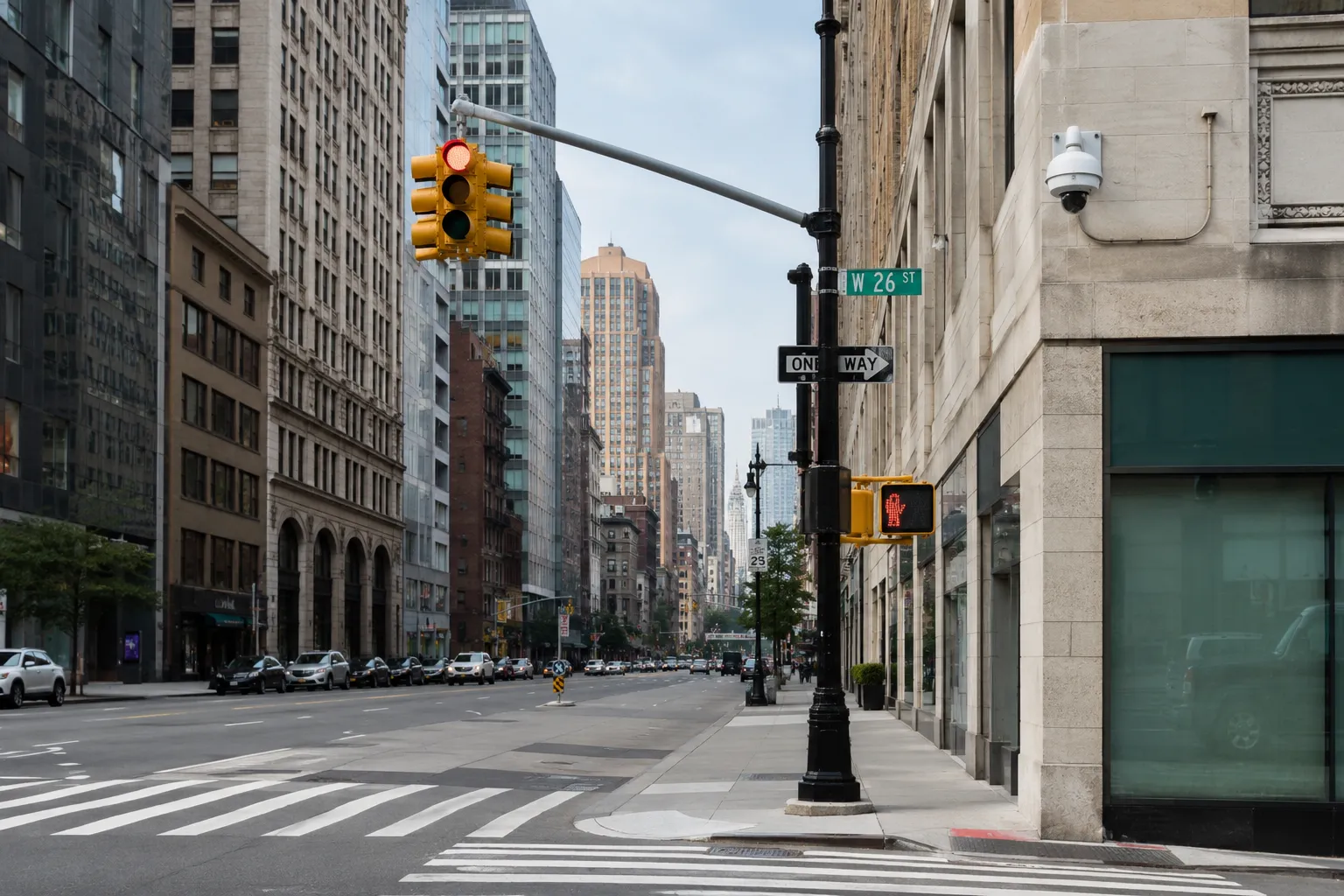
In New York, drivers must yield to pedestrians in marked crosswalks and at intersections, but pedestrians do not have the right of way in every situation. Knowing where the law protects you, and where it does not, matters significantly if you are ever injured while walking in New York City.
Key Takeaways
- Drivers must yield to pedestrians crossing in marked or unmarked crosswalks at intersections.
- Pedestrians crossing mid-block or against a signal share fault under New York's comparative negligence rules, but can still recover compensation.
- New York Vehicle and Traffic Law Section 1151 governs driver yielding obligations at crosswalks.
- A 90-day Notice of Claim applies if the City of New York bears any responsibility for your accident.
- Even if you were partly at fault, you may still have a valid claim under New York's pure comparative negligence standard.
What New York Law Says About Pedestrian Right-of-Way
Under New York Vehicle and Traffic Law Section 1151, drivers must yield the right of way to pedestrians crossing in a marked crosswalk or at an unmarked crosswalk at an intersection. This applies whether or not a traffic signal is present.
When a traffic signal controls the intersection, pedestrians with a walk signal have the clear right of way. Drivers turning left or right on green must yield to pedestrians crossing legally before completing their turn. Failure to do so is a violation of VTL Section 1111 and constitutes negligence. If you were struck in this type of situation, Manhattan crosswalk accident claims follow a specific legal process worth understanding before you speak with an insurer.
Drivers also have a duty to exercise due care to avoid hitting pedestrians anywhere on the roadway, not just in crosswalks. VTL Section 1146 specifically requires drivers to exercise due care to avoid colliding with a pedestrian, and to give warning by sounding their horn when necessary.
What Counts as an Unmarked Crosswalk?
Many people assume a crosswalk requires painted lines. Under New York law, that is not the case. An unmarked crosswalk exists at any intersection where two roads meet at approximately right angles, even without painted markings. Drivers must yield to pedestrians crossing at these locations just as they would at a marked crosswalk.
This distinction matters in accident cases. Pedestrians struck while crossing at an intersection, even without painted lines, are crossing legally and have the same protections as those using a marked crosswalk.
Do Pedestrians Always Have the Right of Way in New York?
No. This is one of the most common misconceptions about New York pedestrian law. Pedestrians crossing mid-block outside of a marked crosswalk, or crossing against a traffic signal, do not have the automatic right of way. Under VTL Section 1152, a pedestrian crossing outside a crosswalk must yield to vehicles on the roadway.
That said, a driver's legal obligations do not disappear simply because a pedestrian is crossing unlawfully. Drivers still have a duty to exercise due care and avoid striking pedestrians even when those pedestrians are not crossing in a designated location. A driver who sees a pedestrian in the road and fails to slow down or take evasive action can still be found negligent.
How Comparative Negligence Affects Your Claim
New York follows a pure comparative negligence standard under CPLR Article 14-A. This means that even if you were partly at fault for the accident, jaywalking, crossing against the light, or looking at your phone, you can still recover compensation. Your damages are reduced by your percentage of fault, not eliminated.
For example, if you are found 25% at fault for crossing mid-block and your total damages are $200,000, you would recover $150,000. Insurance companies frequently argue pedestrian fault to reduce payouts. An experienced attorney can push back on inflated fault attributions and protect your recovery.
If you were hit while crossing in Manhattan and are unsure whether fault affects your claim, the Manhattan pedestrian accident lawyers at Michael Gunzburg, P.C. can evaluate your case at no cost.
What Are the Crosswalk Rules for Drivers in New York City?
Drivers in New York City face additional obligations beyond state law. NYC Traffic Rules Section 4-04 requires drivers to yield to pedestrians who have entered or are about to enter a crosswalk. This applies even when the driver has a green light, a turning vehicle must wait for pedestrians already in the crosswalk to finish crossing before completing the turn.
Blocking a crosswalk is also prohibited. A driver stopped in traffic who pulls into an intersection and ends up blocking a crosswalk faces a violation under NYC traffic rules. Pedestrians regularly encounter this situation in Midtown, where vehicles inch forward during congestion and cut across pedestrian paths.
The NYC Department of Transportation has identified turning vehicles as one of the leading causes of pedestrian fatalities under its Vision Zero initiative. Left-turn crashes are particularly deadly because the driver's attention is split between oncoming traffic and pedestrians crossing in front of them. Illegal turn pedestrian accidents in Manhattan involve specific liability questions that go beyond standard negligence, particularly when a driver makes a turn in violation of posted signage or traffic controls.
For pedestrians struck at a Manhattan crosswalk, the crosswalk accident claims page covers the specific legal process for those cases.
Can You Jaywalk Legally in New York City?
Technically, jaywalking, crossing mid-block outside of a marked crosswalk, is a violation under New York law and NYC traffic rules. In practice, enforcement has been minimal, and New York City decriminalized jaywalking for pedestrians in 2022, eliminating criminal penalties for most mid-block crossings.
Decriminalization does not mean jaywalking is without legal consequence in a personal injury case. If you cross mid-block and are struck, a defendant's attorney will argue that your decision to cross outside the crosswalk contributed to the accident. Under comparative negligence rules, that argument can reduce your recovery. The strength of that argument depends on the specific facts, including where you crossed, traffic conditions, and whether the driver had enough time and distance to stop.
Crossing legally in a marked crosswalk with the walk signal is the strongest factual position you can be in as a pedestrian accident victim. It does not guarantee liability, but it removes one of the most common defenses used by insurance companies.
What Should You Do If You're Hit by a Car in New York?
Call 911 and get medical attention before anything else. Symptoms from head injuries, spinal trauma, and internal injuries often do not appear immediately. Never tell anyone at the scene, including the driver, witnesses, or responding officers, that you are fine. As covered in more detail in this article on what not to say after a pedestrian accident, those statements can be used against you later.
Photograph the scene, the vehicle, and any visible injuries. Get the driver's license plate and insurance information. If there are witnesses, ask for their contact details before they leave.
Do not give a recorded statement to any insurance company before speaking with an attorney. Adjusters are trained to ask questions that elicit answers limiting your claim. You have no legal obligation to provide a recorded statement to the other driver's insurer.
Under New York's no-fault insurance law, you are entitled to Personal Injury Protection benefits covering medical expenses and a portion of lost wages, up to $50,000, through the at-fault vehicle's insurer. You must file a no-fault application within 30 days of the accident. To pursue additional compensation for pain and suffering, your injuries must meet the serious injury threshold under New York Insurance Law Section 5102(d).
If you were involved in a hit-and-run accident, uninsured motorist coverage and the New York Motor Vehicle Accident Indemnification Corporation (MVAIC) may provide coverage options even when the driver cannot be identified.
Frequently Asked Questions
Do drivers always have to yield to pedestrians in New York?
Drivers must yield to pedestrians in marked and unmarked crosswalks at intersections under VTL Section 1151. They also have a general duty of care to avoid hitting pedestrians anywhere on the roadway under VTL Section 1146. A driver who fails to yield to a pedestrian crossing legally is negligent under New York law.
What happens if a pedestrian is hit while jaywalking in New York?
The pedestrian can still pursue a compensation claim under New York's comparative negligence law. Their recovery will be reduced by their percentage of fault, but it is not eliminated. Whether the reduction is significant depends on the specific facts of the accident, including the driver's speed, visibility, and opportunity to avoid the collision.
What is an unmarked crosswalk in New York?
An unmarked crosswalk exists at any intersection where two roads meet at approximately right angles, even without painted lines. Drivers must yield to pedestrians crossing at these locations under the same rules that apply to marked crosswalks.
Does a pedestrian walking signal guarantee the right of way?
A walk signal is strong evidence that a pedestrian was crossing legally and that drivers had an obligation to yield. It does not guarantee that every driver will comply, but it removes any argument that the pedestrian was at fault for crossing unlawfully. Drivers turning on green must still yield to pedestrians with a walk signal before completing their turn.
How long do I have to file a pedestrian accident claim in New York?
Three years from the date of the accident for a claim against a private defendant. Two years for wrongful death. If the City of New York bears any responsibility, a Notice of Claim must be filed within 90 days of the accident, and a lawsuit must be brought within one year and 90 days. Missing these deadlines typically bars your claim entirely.
Can I recover compensation if I was crossing against the light?
Yes, under New York's pure comparative negligence standard. Your damages will be reduced by your percentage of fault. The degree of reduction depends on the facts, a driver who was speeding or distracted may still bear the majority of fault even if you crossed against the signal.
What is the serious injury threshold in New York pedestrian accident cases?
To pursue a claim for pain and suffering beyond no-fault benefits, your injuries must meet the serious injury threshold under New York Insurance Law Section 5102(d). Qualifying injuries include fractures, traumatic brain injuries, significant disfigurement, permanent limitation of a body organ or member, and injuries preventing you from performing daily activities for at least 90 of the 180 days following the accident.
Speak With a New York Pedestrian Accident Attorney
New York's pedestrian right-of-way laws are more nuanced than most people realize, and insurance companies take advantage of that complexity regularly. Michael Gunzburg, P.C. has represented pedestrian accident victims across Manhattan and the five boroughs for over 39 years, helping clients navigate no-fault claims, liability disputes, and serious injury thresholds to recover the compensation they deserve.
If you were struck by a vehicle in New York City, contact Michael Gunzburg, P.C. at (212) 725-8500 for a free consultation. There is no fee unless you recover. You can also find out if you have a case online.
Related Pages:
- Manhattan Pedestrian Accident Lawyer
- Manhattan Crosswalk Accident Claims
- NYC Hit-and-Run Accident Attorney
- NYC Pedestrian Accident Attorney
- Distracted Driving Accidents NYC
The information in this article reflects New York law as of June 2025. This article is for informational purposes only and does not constitute legal advice. Contact Michael Gunzburg, P.C. directly for guidance specific to your situation.