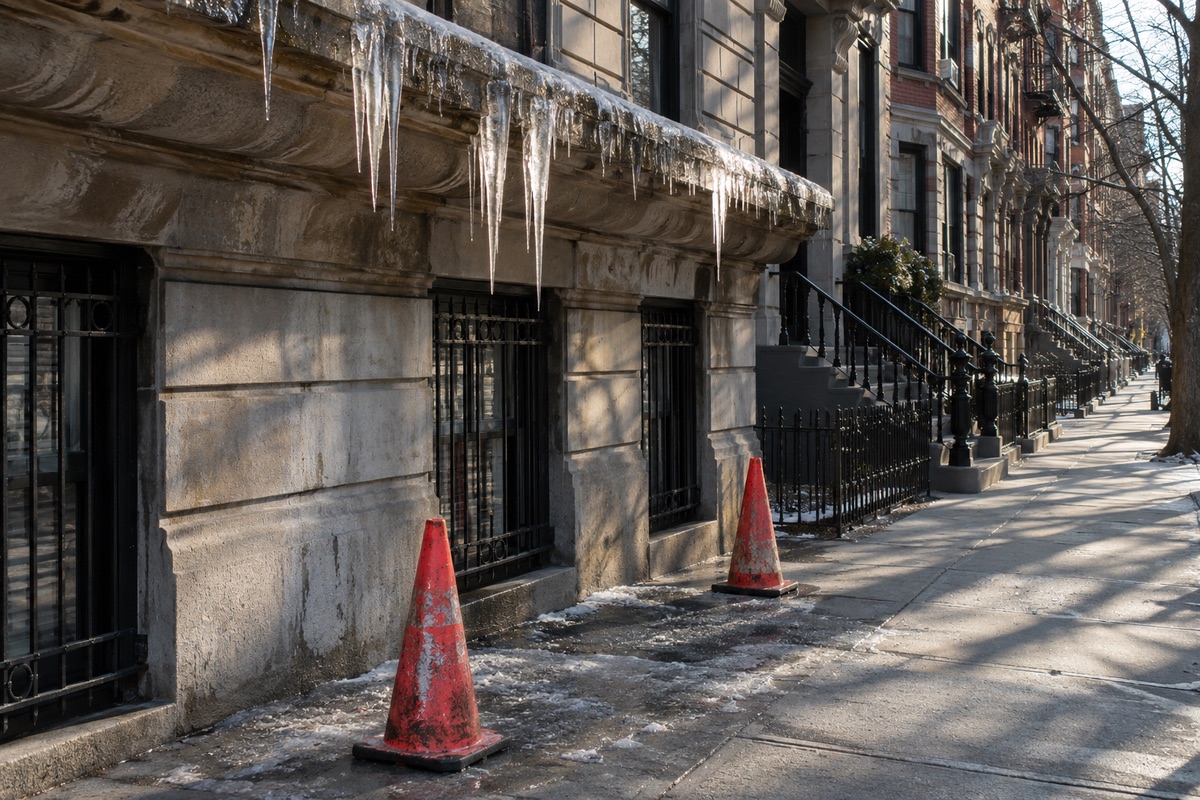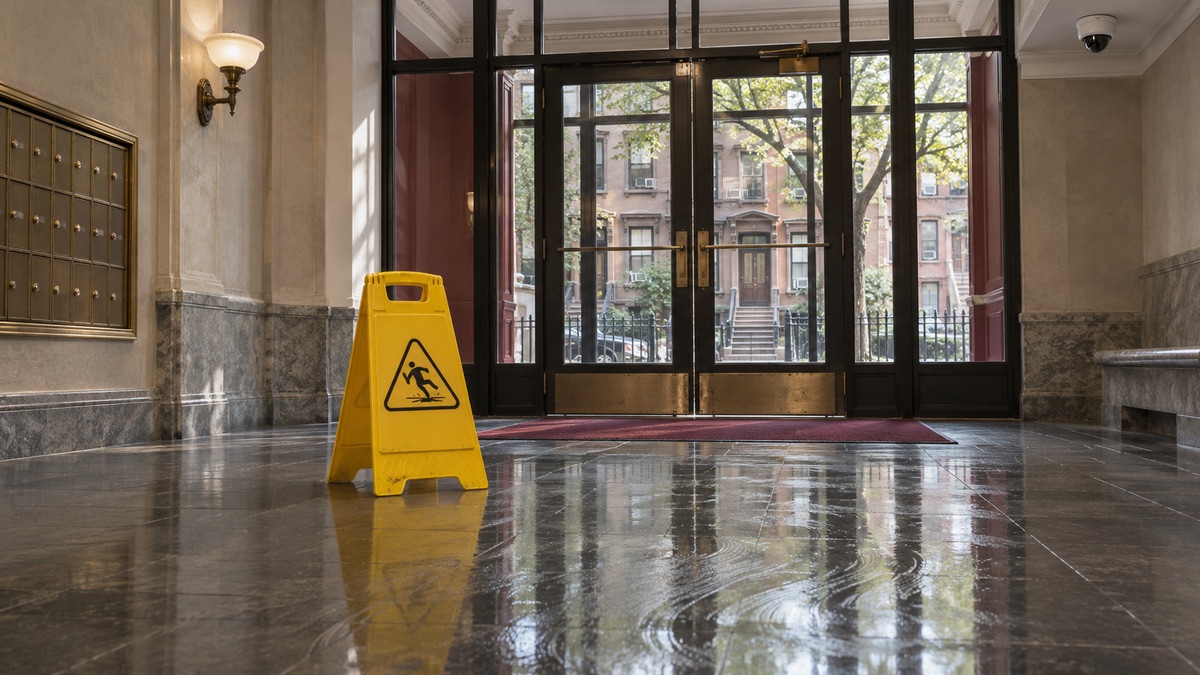
A slip and fall no witnesses saw can still support a claim in New York. The law does not require anyone to see you fall. You must show what caused the fall and that the property owner knew, or should have known, about the hazard. Photos, camera footage, and records can prove both.
Last updated: November 24, 2026
Key Takeaways
- New York law does not require a witness to prove a slip and fall.
- You must prove what caused your fall and that the owner had notice of the hazard.
- Camera footage, photos, incident reports, and medical records can take the place of witness testimony.
- Report the fall, photograph the spot, and keep your shoes and clothing right away.
- Lawsuits against private owners generally carry a three-year deadline, and falls on city property start with a 90-day notice.
Can You Win a Slip and Fall Case Without Witnesses in New York?
Yes. New York law does not require a witness to prove a slip and fall claim. Many cases rest on physical evidence, records, and the injured person's own account.
Witnesses help when they exist, but they play a supporting role. What decides the case is whether you can show what made you fall and whether the owner or manager had notice of the problem. That is true on a Manhattan sidewalk, in a store aisle, or in an apartment building hallway.
What Do You Have to Prove When No One Saw You Fall?
You have to prove two things: what caused your fall, and that the property owner had notice of the hazard. A witness can help with both, but photos and records can do the same work.
The cause of your fall. A case can be dismissed when the injured person cannot say what they slipped on. Photograph the spot, the floor or sidewalk, and any spill, crack, or object as soon as you can. Write down what you saw before the details fade.
The owner's notice. Notice means the owner created the hazard, knew about it, or let it sit long enough that they should have found it. The last kind is called constructive notice. Cleaning logs, inspection records, and prior complaints can show it.
An unwitnessed fall can turn into your word against the owner's. Strong physical proof closes that gap. The firm's premises liability page explains how notice works, and the Manhattan slip and fall page covers how these claims play out on city property.
Does Camera Footage Replace a Witness?
Often it does. Stores, lobbies, and apartment buildings in New York City commonly have cameras, and video can show the hazard, your fall, and how long the condition existed.
Footage can be overwritten on a short cycle, so speed matters. A written preservation request tells the owner to keep the recording.
If a camera may have recorded your fall, contact Michael Gunzburg, P.C. soon so a request can go out before the footage disappears.
What Should You Do at the Scene When No One Saw You Fall?
Call 911 if you are hurt, then report the fall to the owner or manager before you leave. Do both even if your injuries seem minor. Pain can build over the next few hours or days.
- Get medical help. Paramedics record where they found you and what you told them.
- Report the fall to the manager, building staff, or security, and ask for a copy of the incident report.
- Photograph the hazard, the area around it, and any warning signs, or the lack of them.
- Note where cameras are mounted and which way they face.
- Keep the shoes and clothing you wore.
- Write down what happened while it is fresh.
If you may be seriously hurt, let the responders decide whether to move you. A police or EMS report that places you at the scene also blocks a later claim that you fell somewhere else. The firm's guide on what to do after a slip and fall in NYC walks through the first hours, and the page on Manhattan sidewalk slip and falls covers falls on public ground.
What Other Evidence Can Stand In for a Witness?
Documents, photos, and records can prove a slip and fall as well as a witness can. The table shows what each type of evidence proves and how to get it.
| Evidence | What it shows | How you get it |
|---|---|---|
| Your photos and video | The hazard and the scene | Take them at the scene or soon after |
| Surveillance footage | The fall and how long the hazard existed | Preservation request, then a demand |
| Incident report | That the owner knew about the fall | Ask the manager for a copy |
| Medical records | The injury and its link to the fall | Treatment notes and imaging |
| Maintenance and cleaning logs | Whether the owner inspected the area | Requested once a claim is filed |
| Weather records | Rain, ice, or snow at the time | Public weather data |
| Your own account | What happened, where, and why | A written timeline and your testimony |
Your own testimony counts as evidence. A clear, consistent account backed by records can carry a case with no outside witness. Be careful with insurance adjusters, since a recorded statement can be used against you.
How Long Do You Have to File After an Unwitnessed Fall?
Most slip and fall lawsuits against private owners must be filed within three years of the fall. CPLR 214 sets that general limit for personal injury actions.
Falls on city property follow shorter rules. A Notice of Claim is due within 90 days under General Municipal Law 50-e, and the lawsuit itself must start within one year and 90 days.
A missed deadline can end a case no matter how strong the evidence is. The firm's guide to the slip and fall statute of limitations in New York covers the deadlines in more detail.
How Does Michael Gunzburg, P.C. Handle a Slip and Fall With No Witnesses?
Michael Gunzburg, P.C. handles slip and fall no witnesses cases for injured people in Manhattan and across New York City. Each claim starts with the physical proof, because that is what replaces a missing witness.
- Scene visits. The attorney or an investigator working for him goes to the accident scene in person.
- Home and hospital visits. Slip and fall clients who cannot travel can meet with the firm where they are.
- Case value. Attorney Michael Gunzburg is also a CPA, which helps when lost earnings and other economic losses make up a large share of the claim. The compensation page explains how value is measured.
- Cost. The firm works on a one-third contingency fee, and you owe no legal fees or costs if there is no recovery.
For every slip and fall no witnesses claim, the firm's goal is the same: show what caused the fall, show who knew about it, and put the evidence in front of the insurer or the court. The Manhattan slip and fall page and the NYC slip and fall page show the types of falls the firm handles.
Frequently Asked Questions
Do I need a witness to prove a slip and fall in New York?
No. New York does not require a witness to prove a slip and fall claim. You must prove what caused your fall and that the owner had notice of the hazard. Photos, camera footage, incident reports, maintenance logs, and medical records can prove both points.
A witness adds weight, so ask nearby people for contact details if anyone is around. If no one is, the physical evidence carries the case.
Is my own testimony enough to win?
Your testimony counts as evidence, and it works best with support. A clear account of where you fell, what you slipped on, and what hurt gives the case its core. Photos, records, and medical notes back that account up.
Consistency matters. What you tell the manager, the responders, your doctors, and your attorney should match.
What if I do not know exactly what I slipped on?
Tell your attorney that, and keep looking for the cause. A case can be dismissed when the injured person cannot say what caused the fall, so the cause is worth pinning down early. Photos of the area, footage, and an incident report can point to a wet floor, a loose mat, or a cracked sidewalk.
Do not guess in a recorded statement. Say what you know and what you do not.
Can I still file a claim if I did not report the fall right away?
Often yes, but a delay can weaken the case. A prompt report gives you a dated record that the fall happened where you say it did. Without one, the owner may argue the fall happened somewhere else or not at all.
If you have not reported it, do so now in writing and see a doctor. Treatment records and the photos you took still help, and the filing deadlines keep running.
How do I get surveillance footage after a fall?
Ask the owner in writing to keep the footage, and have an attorney send the request if you can. Owners often overwrite video on a short cycle, so waiting can cost you the recording.
Once a claim or lawsuit begins, the footage can be demanded as part of the case. Do not count on the owner to save it on their own.
Should I ask for a copy of the incident report?
Yes. Ask the manager or building staff for a copy, and write down the name of the person who took your report. An incident report records that the owner knew about the fall and what they wrote down at the time.
Some owners decline to hand it over. If that happens, note who you asked and what they said, and tell your attorney.
What if an employee or security guard saw me fall?
An employee or guard counts as a witness, so get their name and job title for your notes. Owners and insurers usually speak with these employees early, and their account can help or hurt. Do not argue about the fall at the scene.
Your attorney can find out what they saw and whether it matches your account.
Should I give a recorded statement to the insurance adjuster?
Talk to an attorney first. A recorded statement can be used to challenge your account, and small details can be taken out of context. You can give your name and contact information and decline to discuss how the fall happened until you have advice.
How long do I have to file a slip and fall claim in New York?
Most lawsuits against private owners must be filed within three years. For falls on city property, a Notice of Claim is due within 90 days, and the lawsuit must start within one year and 90 days.
Do not wait to find out which rule applies to you, because a missed deadline can end the case. The slip and fall statute of limitations guide has more detail.
Get Help After a Fall With No Witnesses
A missing witness does not end a slip and fall claim in New York. The cause of the fall, the owner's notice, and the evidence you gather in the first days carry the case.
If you fell and no one saw it, contact Michael Gunzburg, P.C. to talk through what happened. The sooner the firm hears from you, the sooner footage and records can be protected.