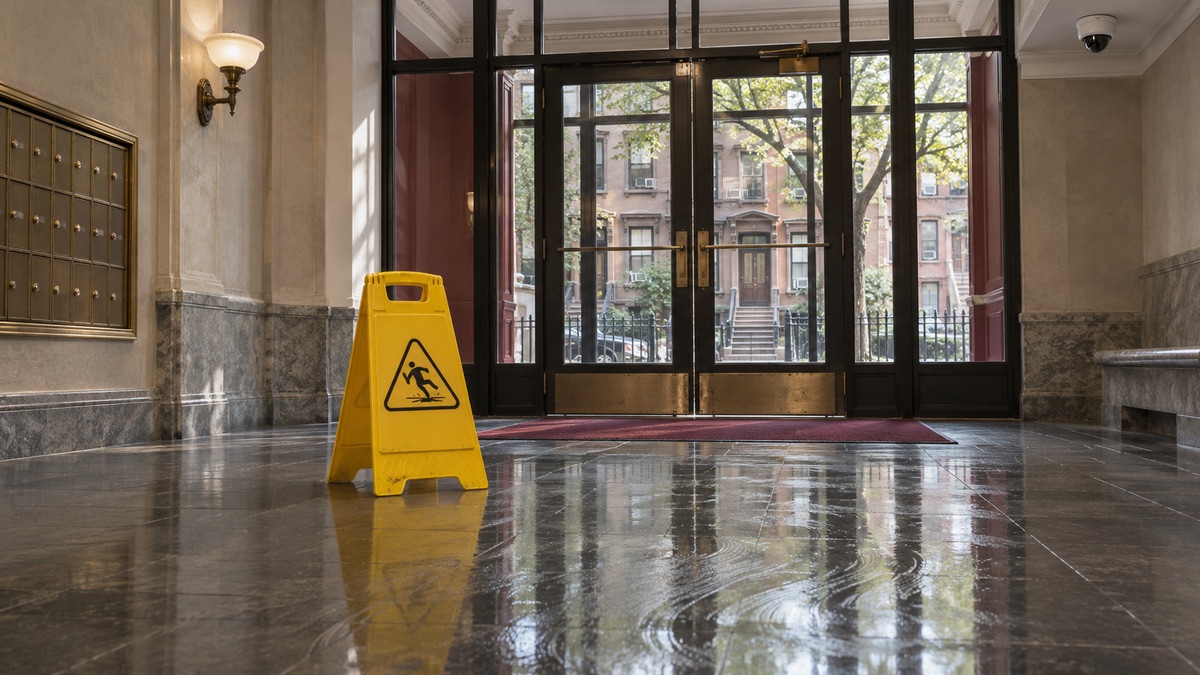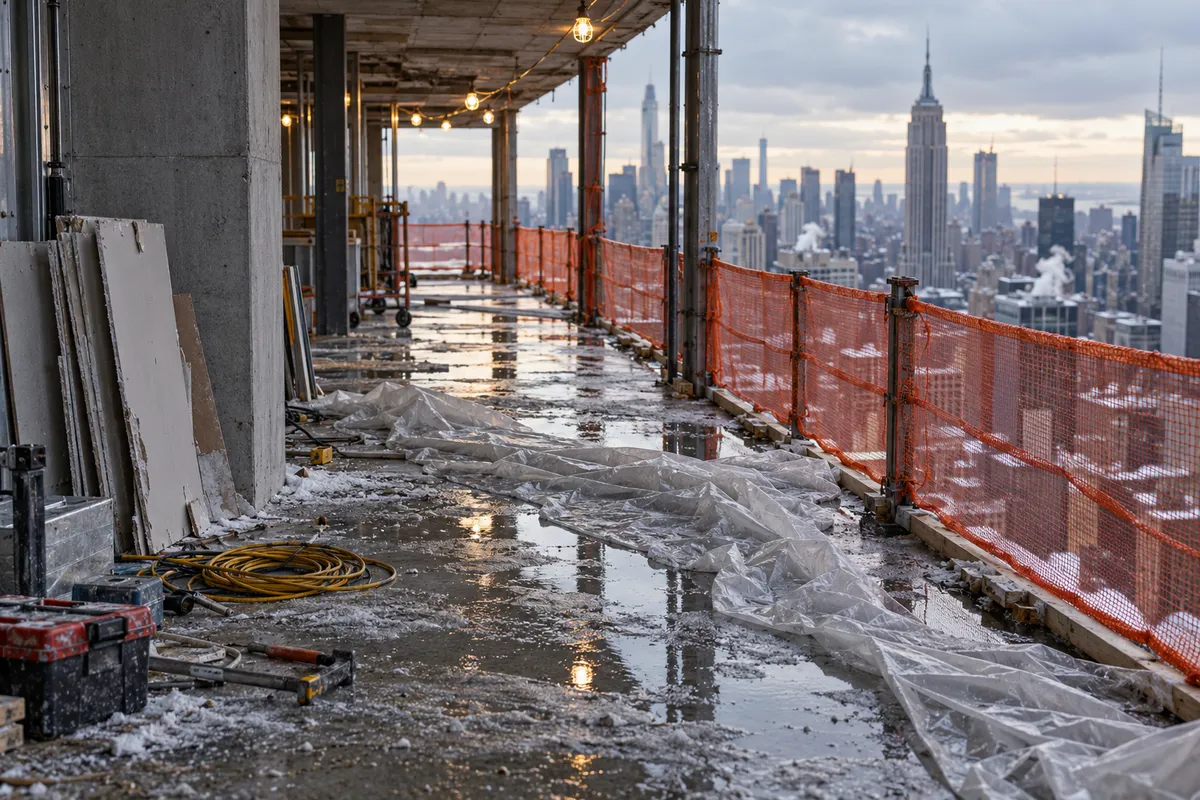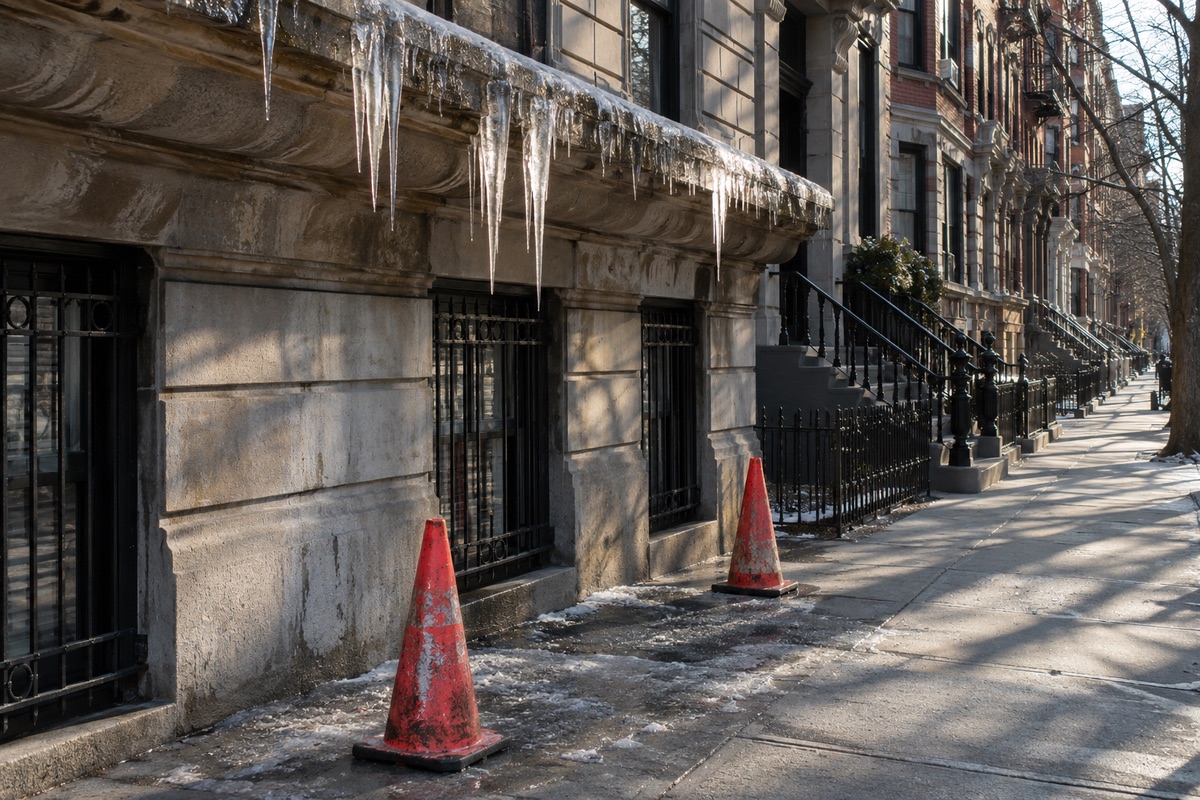
Falling ice liability in NYC usually rests with the building owner. City law requires owners to keep their buildings in a safe condition, and city agencies tell them to clear melting ice from roofs, overhangs, and gutters. Property managers, tenants, and contractors can share the blame. Notice and the source of the ice decide the claim.
Last updated: November 24, 2026
Key Takeaways
- The building owner is usually the main target when ice falls from a building in New York City.
- Section 28-301.1 of the NYC Administrative Code requires buildings to be maintained in a safe condition.
- Property managers, tenants who control the space, and contractors can also be liable.
- You must tie the ice to a specific building and show the owner knew or should have known about the danger.
- Claims against private owners generally carry a three-year deadline, and claims against the City start with a 90-day notice.
Who Is Liable When Ice Falls From a Building in NYC?
The building owner is usually the first party to hold responsible. The owner controls the roof, ledges, and overhangs where ice forms, and city rules put the duty to keep them safe on the owner.
An injured pedestrian does not have to prove the owner meant any harm. The claim rests on negligence, which means the owner failed to use reasonable care and someone was hurt. A Manhattan tower and a small walk-up follow the same basic rule.
What Does NYC Law Require Owners to Do About Falling Ice?
NYC law requires owners to keep buildings in a safe condition, and city guidance names melting ice as a hazard they must control. Section 28-301.1 of the Administrative Code says all buildings and all parts of them must be maintained in a safe condition.
The city's 311 page on snow and ice on buildings says owners and construction site managers must secure their property against melting or falling ice and snow. It lists the steps: clear melting snow and ice from roofs, overhangs, and gutters, and keep gutters and spouts free of debris so water can drain.
The Department of Buildings warns that falling icicles and snow masses can injure pedestrians and damage vehicles. Its advisories are a courtesy and do not shift responsibility away from the owner. [
Can Anyone Besides the Owner Be Liable for Falling Ice?
Yes. Anyone who manages or controls part of a building can share liability. The city's Health Code puts a duty to operate a building in a safe condition on the owner, manager, agent, lessee, tenant, or occupant who controls all or part of it.
Who is responsible depends on where the ice came from.
| Party | When they may be liable | What to look for |
|---|---|---|
| Building owner | Ice from the roof, ledges, facade, or overhangs | Ownership records, inspection and clearing logs |
| Property manager or agent | Day-to-day control of building maintenance | Management contracts, work orders |
| Tenant or occupant in control | Ice from an awning, canopy, or space the tenant controls | Lease terms, who installed or used the awning |
| Contractor or construction site manager | Ice or snow from scaffolds, sidewalk sheds, netting, or site equipment | Department of Buildings permits, site logs |
| City or other public owner | Ice from a government-owned building | A Notice of Claim within 90 days |
Several companies can touch one building, so finding the right party is often the hardest step. A lawyer can trace who owned and controlled the space from public and private records.
How Do You Prove a Falling Ice Claim?
You prove it by showing where the ice came from and that the responsible party knew, or should have known, about the danger. The rest of the case builds on those two points.
- The source. Photos of the building face, the address, and the side the ice fell from tie the ice to one building.
- The warning signs. Cones, tape, or signs near the entrance show the owner saw the risk. The lack of them can show the opposite.
- The weather. Weather records can show a freeze followed by a thaw.
- The notice. Prior complaints, violations, and city weather advisories before the thaw can help show the owner was warned.
- The injury. Medical records connect your injuries to the strike.
If you were hit and are not sure which building the ice came from, contact Michael Gunzburg, P.C. soon, since footage and records can disappear.
What Should You Do After Being Hit by Falling Ice?
Call 911 and get medical care first. The city's 311 service tells people to call 911 for falling ice that is an immediate danger and for an accident that has just caused injury.
- Get medical help, even if you feel fine. Head and neck injuries can show up later.
- Note the building address and the side or level the ice fell from.
- Photograph the ice, the area, any warning signs, and the face of the building.
- Collect names from people nearby, including doormen and security staff.
- Keep your clothing and any damaged items.
- Write down the time, the weather, and what happened.
The firm's guide to what to do after a slip and fall in NYC covers the first hours in more detail, and the Manhattan pedestrian accident page explains how claims for people hurt on foot work. Slipping on ice on the ground is a different claim, covered on the Manhattan ice and snow page.
How Long Do You Have to File a Falling Ice Claim?
Most falling ice lawsuits against private owners must be filed within three years of the injury. CPLR 214 sets that general limit for personal injury actions.
If the ice fell from a City-owned building, the rules are shorter. A Notice of Claim is due within 90 days under General Municipal Law 50-e, and the lawsuit itself must start within one year and 90 days.
A missed deadline can end a case no matter how strong the evidence is. The firm's guide to the slip and fall statute of limitations in New York explains how the deadlines work.
How Does Michael Gunzburg, P.C. Handle a Falling Ice Case?
Michael Gunzburg, P.C. handles falling ice liability NYC claims for pedestrians hurt in Manhattan and across New York City. For every falling ice liability NYC case, the first job is to find the building the ice came from and the party in control of it.
- Scene visits. The attorney or an investigator working for him goes to the accident scene in person.
- Home and hospital visits. Clients who cannot travel can meet with the firm where they are.
- Case value. Attorney Michael Gunzburg is also a CPA, which helps when lost earnings and future care make up a large share of a serious injury claim.
- Cost. The firm works on a one-third contingency fee, and you owe no legal fees or costs if there is no recovery.
The Manhattan slip and fall page and the premises liability page explain the property owner duties behind these claims.
Frequently Asked Questions
Who is responsible when ice falls from a building in NYC?
The building owner is usually responsible. City law requires owners to keep buildings in a safe condition, which includes clearing melting ice from roofs, overhangs, and gutters. A property manager, a tenant in control of the space, or a contractor can share the blame, depending on where the ice came from.
Which party is liable turns on who owned and controlled the part of the building the ice fell from. Records from the city and the building can show that.
Can I sue if ice from a building hits me?
Yes. If falling ice injures you, you can bring a negligence claim against the party responsible for the building. You generally must show the ice came from that building and that the party knew, or should have known, about the danger. Photos, weather records, and medical records support both points.
What if I do not know which building the ice fell from?
Write down the exact spot where you were hit, the time, and the nearby addresses as soon as you can. Photograph the roofs, ledges, and awnings of the buildings around you. Ask nearby doormen and security staff what they saw.
An attorney can use that information, building records, and any camera footage to narrow down the source.
Can a tenant or store be liable for falling ice?
Yes, if the ice fell from something the tenant or store controlled. An awning, a canopy, or a sign over a storefront are common examples. The city's Health Code puts a duty to keep a building or part of it safe on tenants and occupants who control that space.
Lease terms and who installed or used the structure help show who was in charge.
Does a warning sign or caution tape protect the owner?
Not automatically. A warning can help an owner argue they took care, but it does not erase the duty to keep the building safe. Whether it was enough depends on the facts, such as how large the danger was, where the sign stood, and whether the area was closed off.
If you were hit anyway, tell your attorney which warnings you saw, or did not see.
What injuries can falling ice cause?
Falling ice can cause head injuries and concussions, neck and spine injuries, broken bones, and facial injuries. Some symptoms show up hours or days later. A medical exam right away protects both your health and your record of the injury.
How long do I have to file, and are City buildings different?
Most lawsuits against private owners must be filed within three years. For ice that fell from a City-owned building, a Notice of Claim is due within 90 days, and the lawsuit must start within one year and 90 days.
A missed deadline can end the case, so speak with an attorney quickly. The slip and fall statute of limitations guide has more detail.
Should I give a statement to the building's insurance company?
Talk to an attorney first. A recorded statement can be used to challenge your account, and small details can be taken out of context. You can give your name and contact information and decline to discuss how the injury happened until you have advice.
Get Help After Being Hit by Falling Ice
Falling ice is not a freak accident when an owner ignored a known danger. The building, the party in control of it, and what that party knew carry the case.
If ice from a building hurt you, contact Michael Gunzburg, P.C. to talk through what happened. Acting soon helps protect footage, records, and your filing deadline.